Bringing back Scotland's ancient pine forests

 BBC
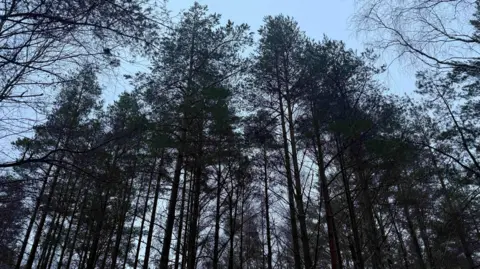
BBCScots Pines once dominated the landscape of Scotland, part of the vast Caledonian Forest which began to spread some 10,000 years ago after the end of the last ice age.
Now only one per cent of the original forest remains in more than 80 pockets scattered mainly across the Highlands.
Conservationists say there is an urgent need to improve the protection of these forests as climate change and threats from disease intensify.
A new study from the James Hutton Institute in Aberdeen has revealed the environmental importance of preserving native woodlands.
The research suggests the Scots pine alone supports nearly 1,600 separate species, including 227 that rely on it entirely.
"Very few other tree species will support that range of biodiversity," said Dr Ruth Mitchell, who led the study.
"Species that use Scots pine include birds, mosses, lichens, fungi and invertebrates."
The forest's degradation has contributed to a decline in biodiversity and has reduced carbon storage, exacerbating climate change, say environmentalists.
But, they say, big strides have been made in recent years to shore up these ancient stands and to plant more trees generally.
Since 1998, woodland cover in Scotland has been increased from 16.6% of the total land area to 19.4%, or from 1.3m to 1.5m hectares.
Some of this has come from preserving and expanding the original Caledonian Forest.
"There's a lot of efforts going into trying to re-establish our native pine woods", said Dr Mitchell.
"That can be done by reducing deer numbers or by planting native woodland species.".
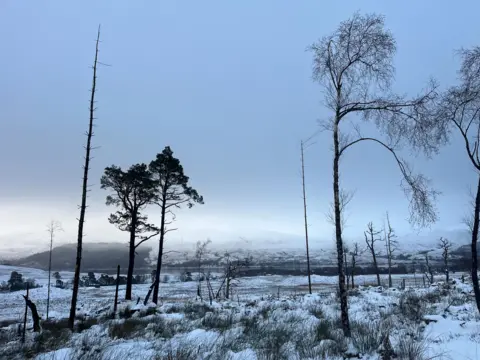
We travelled to one such project at Arkaig Forest on the shores of Loch Lochy, which cuts deep into the glacial fault known as the Great Glen, slicing Scotland in two between Inverness and Fort William.
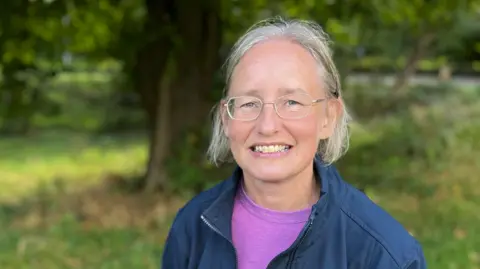
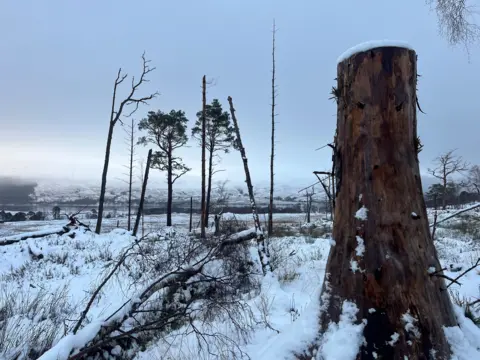
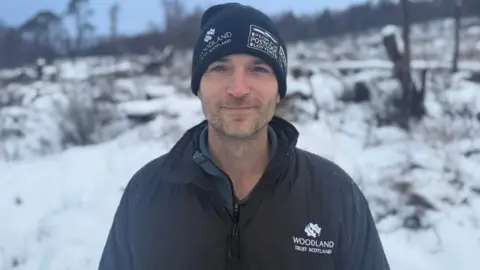
Liam Wright, site manager for the Woodland Trust at Loch Arkaig, said they had spent the past four years removing tightly-packed non-native species planted for timber - such as sitka spruce - from a 600 hectare plantation, to allow native species to thrive.
"Without Scots pine you don't have Caledonian pine forest and without Caledonia pine forest you don't have the species which have evolved to use that as their niche habitat. So it's absolutely central to the biodiversity in the area," he said.
The next step in the project is to accelerate the planting of Scots pine.
In a community-run nursery, that work is already underway with 10,000 saplings nestling under snow, waiting to be planted.
"This year we're intending to grow probably twice as many as we have done previously, so up to about 20-30,000 trees," said Angela Mercer, chair of Arkaig Community Forest.
The area, she said, is alive with red squirrels, pine martens, black grouse and even wild boar, not to mention mosses and lichens, beetles and moths.
"These are tiny fragments of our heritage, our natural heritage, that would be an absolute tragedy to lose," she said.
One of the most serious risks to ancient woodlands, she explained, are deer, whose numbers have soared in recent decades.
That has prompted debate about the potential reintroduction of predators such as lynx.
At Arkaig forest they have taken a waste-not-want-not approach to dealing with deer, by building a venison larder.
"We do need to manage the numbers especially within nature restoration projects and to improve the amount of biodiversity that is on the land," said Jared Child, Arkaig Community Forest's operations manager.
He describes venison as a "high value, high quality, local, low carbon and sustainable meat that we should be having more day-to-day."
The cuts processed in the larder - which range from steaks to sausages - are "sent out to the community, local businesses and at the minute we are looking to try and get more venison into schools," he said.
Dr Mitchell believes the Arkaig project should serve as an example to other estates.
"There's no doubt that some estates' activities are having a detrimental effect on some aspects of biodiversity," she said.
"I think there are some really good examples, like at Loch Arkaig, of where we're getting some great restoration going.
"The more land managers that can do that, the more examples we've got for – hopefully - encouraging other landowners to do likewise."