WW2 anti-tank defences turned into seabird nesting sites

 Eilidh Ross
World War Two anti-tank defences on the Aberdeenshire coast near Fraserburgh have been converted into nesting sites to help boost numbers of common tern.
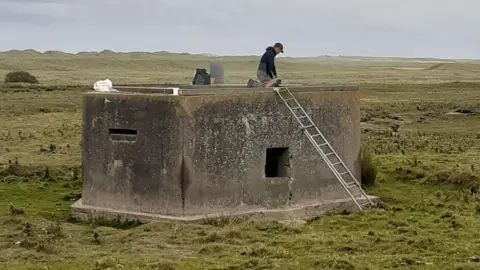
The pillboxes at Loch of Strathbeg were constructed in 1940 to protect a flat stretch of Aberdeenshire coast from potential invasion.
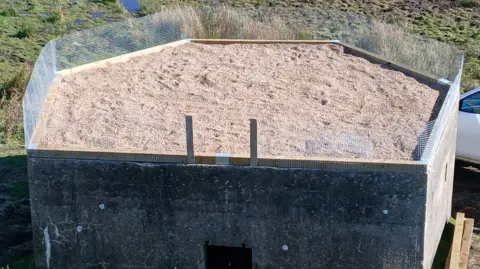
The tops of the 85-year-old concrete structures have been covered with shingle for the birds to nest in, and mesh fencing has been put up to protect the terns against predators.
Conservation project Species on the Edge converted four pillboxes at the RSPB Scotland reserve.
 RSPB Loch of Strathbeg
The shingle mimics stony beaches and areas of gravel terns typically build their nests in.
Luke Butler, who led the conversion work, said: "It's great to be transforming these relics of wartime defence into sanctuaries that could bring new life to the reserve and help create a securer future for common terns in Scotland."
Recordings of tern calls are being played and models of the birds have been placed on the pillboxes to encourage the birds to use the nest sites.
Pillboxes are block-like structures with narrow openings where weapons, such as machine guns, could be fired from.
 RSPB Loch of Strathbeg