Data centre which will recycle heat gets go-ahead

 LDRS/Norr
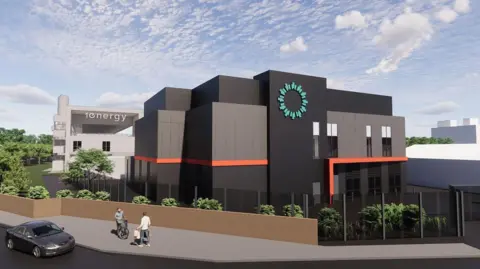
The construction of a new data centre in Bradford that will recycle the heat it produces as part of a new energy network has been described as "a major vote of confidence" in the city.
An application to build the centre at the junction of Thornton Road and Listerhills Road has been approved by Bradford Council.
Developers Deep Green described the 5.6-megawatt data centre as a "landmark project" that will help reduce Bradford's carbon emissions by 4,500 tonnes a year.
Mayor of West Yorkshire Tracy Brabin said Bradford was "perfectly placed to harness this opportunity and help us innovate to build a stronger, better off West Yorkshire".
"This investment is a major vote of confidence in Bradford and in our region's future as an AI powerhouse," she said.
The data centre is expected to become part of the new Bradford Heating Network, recycling the heat it produces and pumping it into a neighbouring energy centre.
The energy centre - which is due to go live later this year - will use air source heat pumps to then heat buildings including the City Hall and the University of Bradford.
Deep Green's Bradford site would provide "high-density colocation capacity for universities, public sector bodies and businesses running AI inference and data-intensive workloads", according to a company statement.
The centre was designed to eliminate water usage and reuse up to 95% of generated heat for practical local benefit, it added.
'Major milestone'
Plans for the data centre were submitted last year.
One condition of the approval was that the fuel used in the on-site back-up generator must be restricted to Hydrotreated Vegetable Oil.
That would "minimise public exposure to generator emissions as far as possible", according to the Local Democracy Reporting Service.
Mark Lee, chief executive of Deep Green, said gaining planning approval was "a major milestone" for "a different kind of digital infrastructure".
"The UK needs more data centres, that's a fact. But it does not need more waste," he said.
"Our model is simple: use the electrons twice. First to power AI and high-performance computing, then to heat homes and buildings."
John Hartley, chief executive of 1Energy, the company that will run the neighbouring energy network, said the collaboration was about "making better use of local energy resources".
"It's exactly the kind of innovative infrastructure partnership the UK needs as we look to strengthen energy security while supporting economic growth and digital innovation," he added.
Listen to highlights from West Yorkshire on BBC Sounds, catch up with the latest episode of Look North.
