Spring equinox at Stonehenge: Rules, weather and rituals

 Reuters
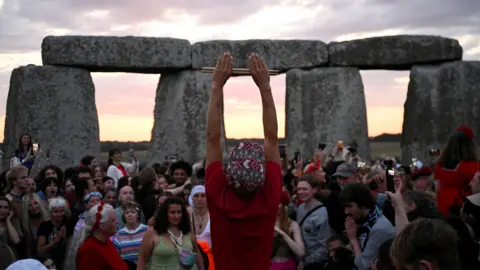
Hundreds of people are preparing to head to Stonehenge to celebrate this year's spring equinox.
On Friday, Druids and Pagans will descend on the prehistoric historic monument to watch the sunrise and mark the point of the year when day and night are almost equal in length.
Access to the site is free of charge, with English Heritage urging those who attend to be respectful of the site
Here's what you need to know about the event.
Conditions of entry
There are a number of rules in force to ensure the ancient site is not damaged by the millions of tourists who visit it annually.
Those attending are not allowed to climb on the stones or bring alcohol, drugs, glass and drones.
Camping is not permitted, so tents and sleeping bags are also banned.
Any antisocial behaviour will result in removal by security or police, according to English Heritage.
Access on the day
Entry to the monument will begin when lighting allows and is safe to enter on Friday morning.
The car park will open at 05:15 GMT, with the sun expected to rise at 06:11.
Open access to the stones will cease at 08:30 and all vehicles must vacate the car parks by 11:00.
A shuttle bus will be in operation once the monument field opens, but walkers are being warned that it is a 25-30 minute walk from the visitor centre to the monument itself.
Weather
English Heritage says it hopes "the weather will be kind" and it looks likes the atmospheric conditions will oblige.
According to the Met Office forecast, Friday morning is will be sunny, with highs of 15C (59F) throughout the day.
Rituals
Worshippers like to observe a moment of silence as the day's first sunbeams arrive above the stones, which many describe as a spiritual experience.
The equinox marks a time of balance, renewal and transition in Pagan belief systems, tied to seasonal cycles and ancient ritual practices.
According to English Heritage, it is likely worshippers for centuries conducted rituals and ceremonies relating to the changing seasons, the sun and the sky.
For Neolithic people, sunlight provided warmth for them and their animals and for helping crops to grow.
Follow BBC Wiltshire on Facebook, X and Instagram. Send your story ideas to us on email or via WhatsApp on 0800 313 4630.
