Views sought on 'unique' SEN school unit proposal

 Google
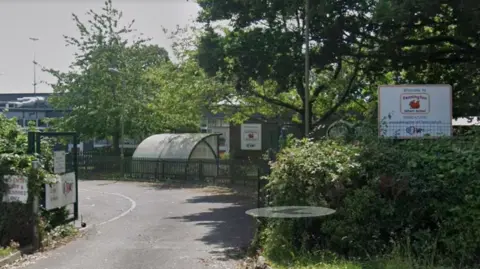
An informal consultation will be launched into proposals to create a "unique" special educational needs (SEN) unit at the site of a former infant school.
If approved, Hampshire County Council's plans would see 50 new SEN places created at Pennington Primary School, in Lymington, from September 2027.
It follows the council's decision in June to merge Pennington infant and junior schools due to falling pupil numbers.
The authority said the creation of additional SEN provision would help address a growing demand for specialist places.
According to the council, the number of children in Hampshire with an education, health and care plan (EHCP) stood at 20,301 in November 2025.
Without intervention, that figure is forecast to rise to around 28,000 by 2030–31.
Hampshire currently has no designated SEN units, which typically cater for pupils with more complex needs, according to the Local Democracy Reporting Service.
At present, 37 primary schools and 22 secondary schools have resourced SEN provisions, supporting 741 pupils in total.
The council said the Lymington and New Forest area had a particular shortage of specialist places.
In a report, officers described the proposal as a "unique opportunity" to reuse existing, purpose-built school buildings.
The report said: "The decision to create a unit both meets some of the saturated need in the locality whilst also providing flexibility as it operates as part of the primary school.
"Unlike a special school, functioning as a unit will enable the provision to both be separate from the main body of the school as required, and integrated where this is advantageous."
The council estimates the 50 additional places would cost £1.22m a year, compared with around £4m for placing the same number of children in independent or non-maintained special schools.
You can follow BBC Hampshire & Isle of Wight on Facebook, X, or Instagram.