Five things we learned from Senedd election debate

 BBC
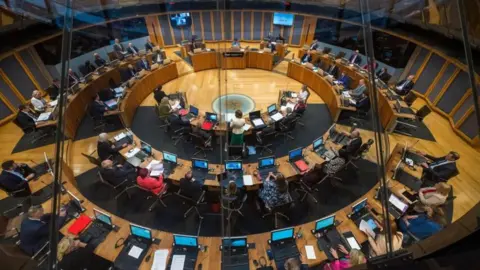
BBCThe 2026 Welsh Senedd election will make history with an increased 96-seat Parliament, 16 new constituencies each returning six members, a system of proportional representation and the potential for real political jeopardy.
Polls suggest Labour's 27-year dominance is under serious threat from Plaid Cymru and Reform.
To kick off the new year, five parties took part in a special debate on BBC Radio Wales' Sunday Supplement with Huw Irranca Davies for Labour, Conservatives' James Evans, Mabon ap Gwynfor from Plaid Cymru, Rodney Berman of the Liberal Democrats and Greens' Anthony Slaughter. Reform declined an invitation to take part.
So what did we learn?
Is the NHS 'broken'?
 Getty Images
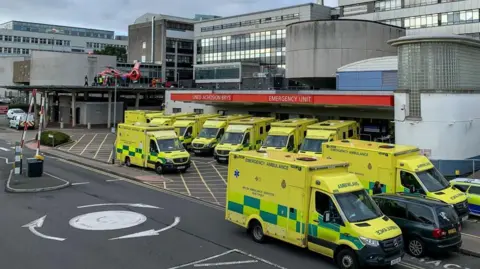
Evans was the only member of the panel who claimed that the Welsh NHS was "broken" and he also suggested the Conservatives would consider cutting the number of health boards that run the service from its current seven.
Irranca Davies said Labour was shifting the focus to primary care, such as pharmacies and more frontline staff, and was "absolutely committed" to hitting its target of trimming 200,000 off what have been record waiting lists by the time of the election.
Ap Gwynfor pledged that Plaid would recruit more GPs - but acknowledged any changes would be in the "current envelope" of funding and Slaughter spoke about using more nurses in the community.
Berman said the Lib Dems would bring in a "social care rescue package", but could not say precisely where the money would come from.
Immigration 'front' of election campaign
Immigration policy might controlled by Westminster not ministers in Cardiff Bay, but, judging by Sunday's programme, politicians in Wales have plenty to say about it.
Ap Gwynfor maintained that the NHS and social care was "entirely dependent" on immigrants "propping it up", while Irranca Davies made the case for "controlled, managed migration" for border security and the economy.
Slaughter said immigration would be "absolutely front" of the campaign, accusing other parties of "dancing to the tune" of Reform, who propose tighter immigration laws.
Evans warned that Reform's plans would "decimate" some public services, but accused parties who claimed immigration was not a problem of "living in cloud cuckoo land" as money spent on "illegal immigrants" was money that could not be spent on public services in Wales.
Consensus on education being a priority
 Getty Images
Labour First Minister Eluned Morgan raised eyebrows before Christmas when she said she was focusing on "measurable targets" such as filling potholes, when asked why education wasn't one of her four headline priorities.
Slaughter called it a "shocking admission", while Irranca Davies said the priorities didn't mean that there was not "relentless focus" on education standards.
Evans proposed funding going directly to schools, bypassing councils who he said "top-sliced" the cash.
Ap Gwynfor and Berman defended their parties' decisions not to push for education cash in recent budget deals with the Welsh government.
There was consensus that education was a priority, but perhaps no stand-out idea of how to achieve that.
Reform's debate absence criticised
Reform declined BBC Wales' invite to take part on the programme, but was still a big presence in studio.
The party's absence was criticised by the other parties, whilst their influence on topics such as immigration was acknowledged.
Polling suggests Reform could become the biggest, or second biggest party, in the Senedd.
Will Sunday's no-show prove to be a one-off, or part of their approach to the election campaign?
The party does well on social media and on those platforms can tell its own story, without interruption from journalists or opponents.
Where does that leave us?
 Senedd Cymru
In a way 2026 starts where 2025 finished.
Labour and the Conservatives are up against it, although Irranca Davies rejected the idea that Labour's time was up and Evans claimed a "narrowing" of the polls.
Ap Gwynfor said he detected a desire for change, but was "taking nothing for granted."
Reform in Wales remains something of a mystery.
Greens are confident of a "small handful" of Members of the Senedd (MSs), but by highlighting his support for independence, does Slaughter run the risk of some potential supporters opting for Plaid Cymru, if they believe Plaid's assertion that it is a Plaid versus Reform two-horse race?
The Liberal Democrats are even bolder, with Berman suggesting a haul of between five and 10 seats.
Both smaller parties could yet wield influence as part of a post-election deal.
