Local elections profile: Hackney

 Getty Images
Ahead of the local elections on Thursday 7 May, we have produced short guides to London's 32 boroughs.
Where is it? The London Borough of Hackney is in north-east London and is bordered by Islington, Haringey, Waltham Forest, Newham, Tower Hamlets and the City of London.
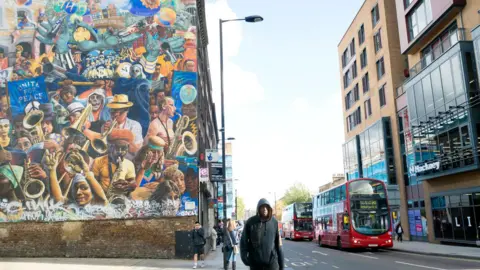
What's it like? Hackney is known for its creative scene and fast‑paced gentrification. Long‑standing residents live alongside an influx of young professionals and families, making it an area where rapid change and deep‑rooted community sit side by side.
Neighbourhoods: Key areas include Hackney Central, Dalston, Stoke Newington, Shoreditch, Hoxton, Hackney Wick, Clapton, Haggerston and Stamford Hill.
Places of interest: People enjoy visiting markets such as Broadway Market and Netil Market; its green spaces including London Fields, Victoria Park and Clissold Park; and cultural landmarks like the Hackney Empire, Sutton House and the Viktor Wynd Museum of Curiosities.
Pub quiz fact: The Cat and Mutton pub, located on Broadway Market in Hackney, is regarded as the inspiration for the Queen Victoria pub in EastEnders.
Population (2024 estimate): 266,758
Demographics: According to the 2021 census, 53.1% of Hackney residents identified as white, 21.1% as black, 10.4% as Asian and 8.7% as belonging to another ethnic group.
Average property price: According to the Office for National Statistics (ONS), the average house price in January 2026 was £622,000.
Average monthly rent: The ONS reported that the average monthly rent in January 2026 in Hackney was £2,589.
Council tax: Band D council tax in the borough is £2,060.30.
Transport: Hackney has 14 London Overground stations and about 455 bus stops, according to Transport for London.
 Getty
GettyLocal history: Hackney's story stretches from Roman farmland supplying food to Londinium to one of London's most diverse and creative boroughs.
First recorded in 1198, the area grew from small medieval hamlets around churches in Hackney, Shoreditch and Stoke Newington.
By the 18th and 19th centuries, Hackney shifted from rural pasture to early industry on the River Lea, with mills, paint works and furniture workshops driving growth.
Railways in the mid‑1800s accelerated urban development and created the dense Victorian streets still seen today.
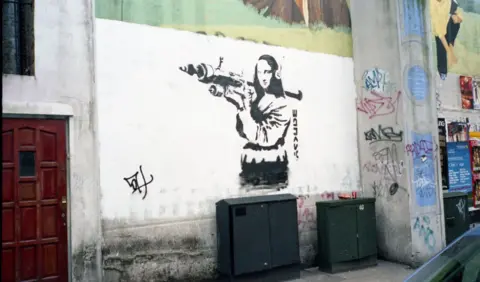
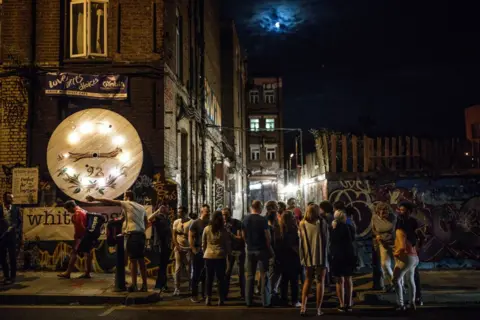
By the late 20th Century, disused industrial spaces and low rents attracted artists, musicians and nightlife venues, helping transform Hackney into a centre for culture, creativity and innovation while remaining rooted in long‑standing, diverse communities.
 Getty Images
What is the borough's electoral history? After a brief spell of Tory rule, Hackney has been Labour for most of the rest of its history, though it did fall to no overall control from 1998 to 2002 when the Lib Dems surged to 17 seats. Labour's dominance has been unchallenged since 2002.
Labour has also held the role of directly-elected mayor of Hackney since the post was created in 2002.
What happened in 2022? The turnout was 34.1% and there was a swing from Labour to the Greens.
Labour: 50 seats (-2)
Conservatives: 5 seats (nc)
Greens: 2 seats (+2)
Since the election the Tories and the Greens have won a by-election each against the Labour Party.
There will also be an election for the mayor of Hackney on 7 May.
The borough's directly-elected mayor has significant powers over local services such as housing, including local regeneration schemes and affordable housing targets, planning and waste collection.
The mayor is the political leader of the council and they appoint a cabinet made up of elected councillors who are given specific portfolios such as finance, community safety and children's services.
This is different from the mayor of London, currently Sir Sadiq Khan who was elected in 2024. The mayor of London has responsibility for police, fire and rescue, Transport for London and strategic matters that affect all 32 London boroughs.
Election expert Tony Travers on what might happen in Hackney in 2026
Professor Tony Travers, of the London School of Economics, said: "Hackney currently has a Labour mayor and a Labour council, but it's the Greens' number one hope. They want to win both.
"They want to win the mayoralty and they also want to win a large number of extra councillors so they control the council as well.
"It is their best chance, and on the basis of what we can see elsewhere, they've got a pretty good chance - and if they don't win that will be very bad for them."
Listen to the best of BBC Radio London on Sounds and follow BBC London on Facebook, X and Instagram. Send your story ideas to hello.bbclondon@bbc.co.uk
