What happened to the washed-up plastic nurdles?

 John Byford
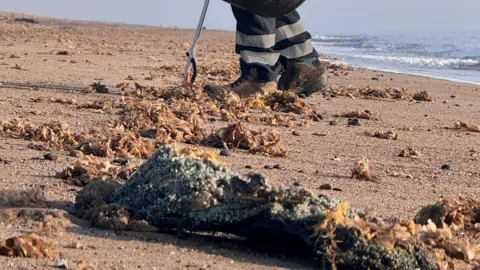
In March 2025, a collision out in the North Sea led to millions of tiny plastic pellets reaching our shores. A mass clear-up began and worried wildlife charities warned of potential devastation for marine life and birds. A year on, what has been the impact of the plastic pollution?
How did this happen?
 REUTER/Phil Noble / DAN KITWOOD/POOL/EPA-EFE/REX/Shutterstock
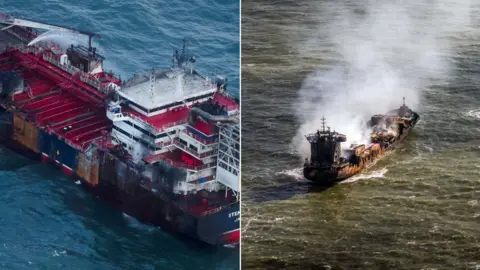
The plastic originated miles out to sea when a US tanker, the Stena Immaculate, and cargo ship Solong, collided off East Yorkshire on 10 March 2025, triggering an explosion and fires.
A week later there were sightings of a shimmering sheen in the The Wash between Lincolnshire and Norfolk.
This turned out to be a mass of plastic pellets, which then ended up on beaches along the Norfolk coast, from Old Hunstanton to Wells-next-the-Sea, and in Skegness, Lincolnshire.
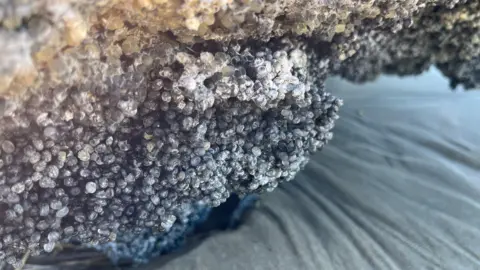
It was feared millions of nurdles spilled into the sea - some individually or moulded together - when the ships caught fire, having been held in containers on the Solong.
What are nurdles and why are they such a concern?
 Shaun Whitmore/BBC
Nurdles are tiny balls of plastic resin which are easy to transport, to be melted down to make plastic products. They are similar in size and shape to red lentils.
It is believed many hundreds of thousands of tonnes of them end up in the environment worldwide every year.
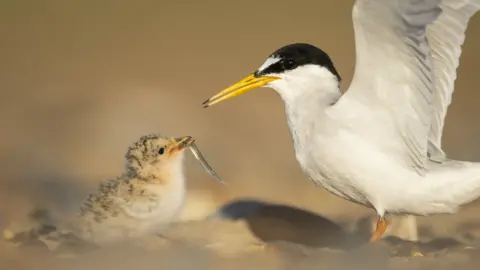
Wildlife - in this case fish and seabirds - mistake them for food, leading to starvation and serious health issues when they become trapped in the stomach, the Marine Conservation Society has said.
 RSPB
RSPBThe Marine Conservation Society described The Wash as an internationally important, protected area for birds like waders, gulls and terns, and said it was deeply concerned.
According to the RSPB, The Wash supports more than 400,000 non-breeding waterbirds, the largest harbour seal colony in the UK, and is home to countless rare plants and invertebrates.
Lincolnshire Wildlife Trust and Norfolk Wildlife Trust were also anxious, and said the risks increased when nurdles became coated in highly toxic pollutants.
"Nurdles look like small fish eggs," said Tammy Smalley, head of conservation at Lincolnshire Wildlife Trust.
"If you are a sea bird or a marine mammal, you might go 'ooh, smorgasbord', and they'll feed on them and they'll either choke or [the nurdles] will go through to the stomach and they think they've fed.
"So, gradually, it could cause starvation."
Over time nurdles break up into smaller and smaller microplastic fragments, which then become an issue for smaller animals and enter the food chain.
What was done to clear them up?
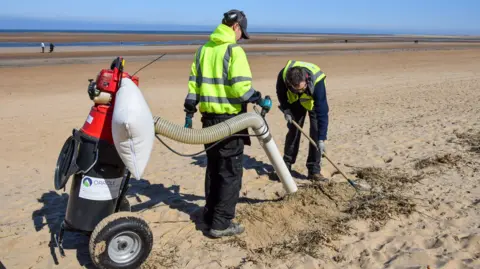 West Norfolk Council
Wildlife organisations said retrieving the nurdles was a race against time and aimed to do as much as possible during six days of small tides in March.
The clock was also ticking because the season for ground-nesting birds - which could not be disturbed - began in April.
Specialist counter-pollution teams were drafted in almost immediately, with vessels in The Wash collecting 36 tonnes of pollution from the sea.
Meanwhile, HM Coastguard said "miles" of the pellets had been found.
People were warned not to touch the nurdles, and to instead alert the coastguard by calling 999, and to keep dogs on leads.
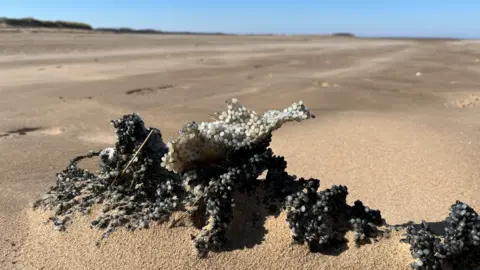 Shaun Whitmore/BBC
Local authorities were charged with clearing the beaches, with the Borough Council of King's Lynn and West Norfolk working with landlords to monitor the situation and remove "burnt-fused nurdles".
East Lindsey District Council carried out clean ups on the other side of The Wash at Skegness. By 1 April, 11 tonnes of plastic had been cleared from Lincolnshire beaches.
Once the larger, fused chunks were removed, a waste management contractor sucked up smaller pieces using a specialist vacuum device at Brancaster, Titchwell, Holme-next-the-Sea and Old Hunstanton,
Within a month of the collision in the Humber, more than 900,000 individual plastic nurdles had been recovered in Norfolk.
What are the lasting effects?
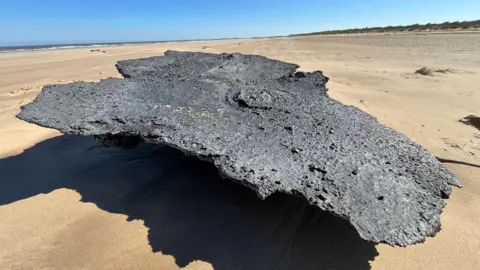 Shaun Whitmore/BBC
Throughout last summer, landowners and volunteers organised beach clean-ups, which proved "invaluable", a spokesman from the Borough Council of King's Lynn and West Norfolk said.
He said the last major piece of recovery work was disposing of plastic at Scolt Head Island, near Brancaster, which had to wait until the end of the summer and the bird nesting season.
The wider impact on marine life and the environment is not yet known.
Teams are still carrying out beach cleans, with the council scaling back its direct role and offering collection and disposal when plastic is found.
"While residual pollution is expected to persist for many years, fewer large burnt-fused nurdles are being reported," the spokesman added.
The advice, if you come across nurdles, has not changed - do not handle it, keep your dogs away and report it to the landowner.
Follow Norfolk news on BBC Sounds, Facebook, Instagram and X.
