'My HIV diagnosis felt like a sledgehammer blow'

 BBC
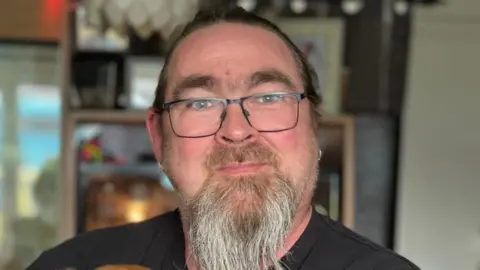
BBCA man who is HIV positive has described how it felt like a "complete sledgehammer blow" when he was first told his diagnosis, but 15 years later it is just "the same as any other chronic illness".
"It's a pill a day," Allan Batcock, from Winsford, Cheshire, explained.
But he did not always feel like this, He said he was "absolutely petrified" when he was given the news in 2010.
He said he was also "shocked" as he did not think heterosexual men could get the virus.
Batcock now gives talks to dispel any remaining misconceptions about HIV and highlights the importance of getting tested.
He recalled the day when his world changed.
"The consultant called me in, she sat me down, and as she was walking from the door to a chair she went, 'There's no easy way to say this - you're HIV positive'."
"It was a complete sledgehammer blow," he said.
"I was absolutely petrified and I went into a mental health spiral."
As well as being scared by what was once seen as "a death sentence", Batcock said he was surprised, too.
"I thought, I'm the only straight man living with HIV," he said.
Headlines in the 1980s spoke of a "gay plague" and misunderstandings about the virus continued for decades.
The most recent government figures from 2024 show that of all the people who tested positive, gay men made up just over a quarter.
According to the UK Health Security Agency half of all diagnosed cases were the result of heterosexual sex and more than half of all late diagnoses were in the over-50s rising to 61% in the over 65s.
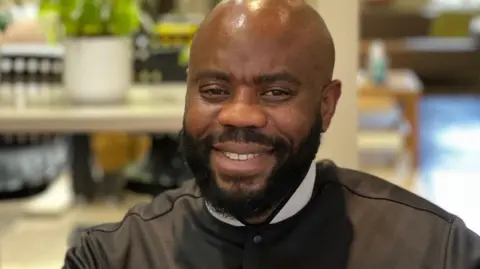
Jeff Ukiri is the African men's engagement coordinator at George House Trust, which provides support, advice and information for people living with HIV.
He said: "Most of the targeting has always been around gay communities so awareness is quite prevalent."
"Interactions around HIV conversations within the community is almost like a normality [and] people that easily have those conversations," he said.
"But within other communities... there's this stigma."
HIV charities are targeting all men, with the message that early diagnosis means early treatment, which can stop the disease in its tracks.
"Testing for HIV is really quick, easy and very simple to do," said Beth Applebee, the sexual health lead for BHA for Equality, a charity which tackles inequalities.
"We have one that's an instant HIV test, it's called a rapid test and what it will show you will either be one dots or two dots.
"One dot means negative and two dots means reactive."
She said: "What we often find is when people come through the door they're very anxious and by the time they've left or even before they've done the test, they're feeling much more relaxed."
Fifteen years on from his diagnosis, Batcock has got married, become a grandfather and now spreads the message on the importance of getting tested for HIV.
"It's something you can live with, the same as any other chronic illness," he said.
"It's a pill a day. My life expectancy is now the same as a person who isn't living with HIV."
Listen to the best of BBC Radio Manchester on Sounds and follow BBC Manchester on Facebook, X, and Instagram. You can also send story ideas via Whatsapp to 0808 100 2230.
