Low earners to pay council tax as changes approved

 LDRS
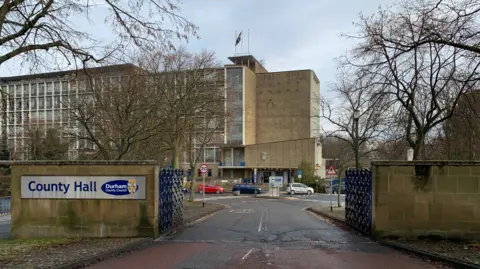
LDRSPeople on low incomes in County Durham will lose their council tax exemption after changes to a discount scheme were approved.
Durham County Council agreed to the shake-up, which will see most residents pay at least 10% of their council tax bills from April.
Leaders of the Reform-led local authority said the move to a banded scheme was "increasingly necessary" due to funding pressures, with a consultation showing support for the measures.
But Liberal Democrat Councillor Mark Wilkes warned the county's most vulnerable residents would be impacted.
Changes to the council tax reduction scheme were approved by 58 votes to 26.
It currently allows low earners to apply for a discount of up to 100% off their bill.
Cabinet members chose to back a 90% discount, with council leader Andrew Husband saying it was a "very generous offer".
"Welfare should be a safety net, not a lifestyle choice," he added.
Councillor Darren Grimes, the council's deputy leader, said the changes meant the scheme would become "fair, efficient and effective".
But Wilkes said: "Taxing somebody who doesn't have money to pay it doesn't work and it is immoral.
"It's simply illogical to try and squeeze money out of somebody who doesn't have any."
'Unsustainable'
A public consultation had received 1,856 responses, with the with the majority in favour of a 75% cap, while about 30% said the support should remain at 100%.
The scheme was introduced in 2013 to offer eligible working-age residents discounts on their council tax bills and currently supports about 31,200 claimants, the Local Democracy Reporting Service said.
The current uncapped system means 84% of claimants have no council tax charges to pay.
Those living in Peterlee, Stanley, Bishop Auckland, and Ferryhill are set to be impacted the most due to the large proportion of people claiming council tax discount there, the local authority said.
The latest proposals do not impact pension-age claimants, as their discounts follow nationally set rules.
Cabinet member for communities and civic resilience Nicola Lyons said: "The current style of the scheme and the speed of migration to Universal Credit have resulted in complexities for residents.
"Utilising the scheme and administration has become unsustainable."
Reform's proposal was also supported by councillor Pete Molloy, Independent member for Spennymoor, who said all working-age residents should contribute to the council.
