'Tiny vial of blood saved my life after rare cancer'

 BBC
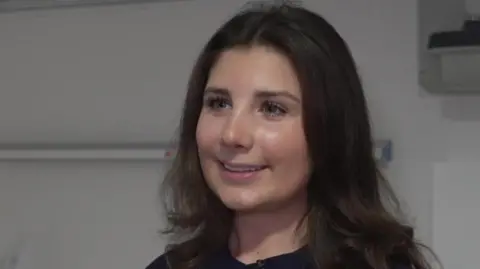
BBCA student who was diagnosed with leukaemia at the age of 16 has credited a "tiny vial of blood" taken from a placenta and umbilical cord in Spain 12 years earlier for saving her life.
Lyra Cassell, 20, was given the devastating diagnosis that she had one of the rarest forms of blood cancer after discovering two lumps on her body four years ago.
In April 2022, she underwent a cord blood transplant at the Royal Manchester Children's Hospital, giving her a new lease of life.
"It's strange to think if a mother in a Spanish hospital didn't decide to donate that blood in 2010, I wouldn't have had a future," said Ms Cassell, from Liverpool.
"The transplant itself was a tiny vial of blood, that was it.
"I still find it crazy how that small vial saved my life."
Parents can choose to donate their child's umbilical cord to a blood bank - and potentially save a life.
Cord blood is rich in stem cells and can be used to treat patients suffering from life threatening diseases, according to the NHS Cord Blood Bank.
 Lyra Cassell
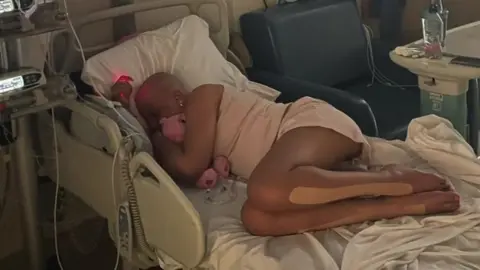
After being diagnosed with precursor T-cell lymphoblastic leukaemia, Ms Cassell started chemotherapy at Alder Hey Children's Hospital in Liverpool five days a week for six weeks.
But she was informed that she would need a cord blood transplant and was transferred to Royal Manchester Children's Hospital, one of the limited number of hospitals who can carry out the procedure.
Professor Rob Wynn, the hospital's consultant paediatric haematologist, said: "We have noticed that the immune cells of cord blood are particularly good at curing leukaemia.
"This means many of our children are alive after a cord blood transplant where another type of transplant might have failed."
Ms Cassell described the first four weeks following the transplant as "tough".
"I was on a lot of heavy medicine and felt out of it," she said.
"I couldn't stomach food so had a feeding tube, the chemo and irradiation had damaged my nerves which, combined with being sedentary for so long, meant I could barely walk."
'Peace of mind'
Her recovery has since inspired her new career in occupational therapy for the NHS.
"I think from my experience of being labelled as a cancer patient, I liked the idea of giving someone their identity back even if it was only a small part of getting them back to something that made them, them," she said.
She said her diagnosis had also prompted many friends and family to sign up the donors.
"One of my best friend's uncles added himself to the donation list and within months was called up to donate his stem cells," she said.
"It gives me peace of mind to know that my diagnosis has also helped other people."
Read more stories from Cheshire, Lancashire, Greater Manchester and Merseyside on the BBC, watch BBC North West Tonight on BBC iPlayer and follow BBC North West on X.
