One thousand washing machines to be built for Gaza

 The Washing Machine Project
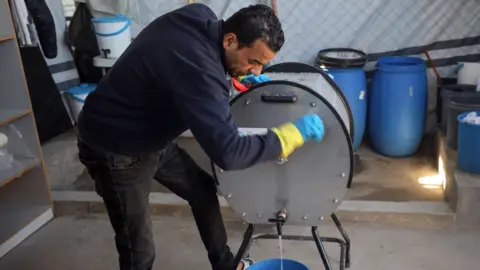
Hand-operated washing machines used in Gaza are being redeveloped to make them easier and cheaper to make so they can help more people.
The Washing Machine Project was set up in 2018 with its manually-operated machines designed by a team of engineers in Bristol.
Four machines were sent to hospitals in Gaza last year and have since been used to wash blankets and scrubs. A further 20 are being made at the project's factory in Easton, with ambitions for 1,000 to be built by the end of the year.
"What we really want to do is solve this problem on a much larger scale," said research and development lead Laura Tuck.
Hugo Morisetti, operations and programmes lead, said the hand-cranked machines had made a "massive difference" to people impacted by the Israeli offensive in Gaza, particularly during cold weather.
The majority of the population in Gaza has been displaced by the war, with most Gazans now living in tents.
Morisetti said The Washing Machine Project wanted to have as big an impact as possible
"The aim is to try to drive it to thousands [of machines], because ultimately there's millions of people in Gaza that have been displaced," he said.
Morisett said having a reliable way to wash heavy blankets, scrubs and clothes was really important.
"Everyone takes for granted the ability to clean clothes every day," he said.
"We're on a journey to 2030 to impact the lives of a million people."
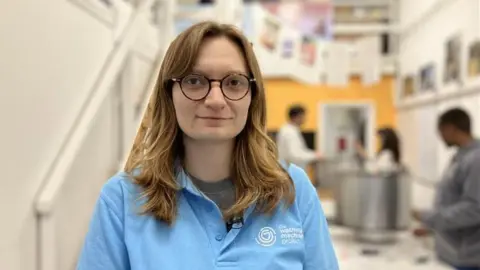
Tuck said the project is having to "rethink the design from the ground up to design a machine that's going to be easier and lower cost to build, assemble and distribute".
She said to be able to upscale the project, the machines need to be made closer to where they will be used. She said the machines were intentionally designed with this in mind and can be made with simple tools.
Follow BBC Bristol on Facebook, X and Instagram. Send your story ideas to us on email or via WhatsApp on 0800 313 4630.
