Mass arrests in Thames Valley crime gang crackdown
"Strike, strike, strike," comes the call over the police radio.
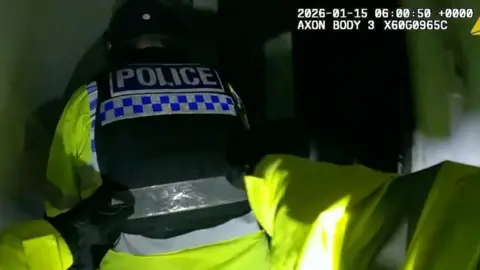
It's early morning and dark outside when a convoy of police vehicles sweeps into a housing estate in Langley, Berkshire.
The officers, armed with a warrant, break open the front door of a house and swarm inside shouting: "Police, stay where you are."
It is one of five raids being carried out simultaneously over three days by Thames Valley Police, all targeting members of the same organised crime group thought to be responsible for a "crimewave" across Berkshire, Buckinghamshire and west London.
The force arrested 55 people during the days of action last week against suspected robbers, burglars, thieves and other criminals working together for illegal gains.
The crackdown involved response officers working with detectives, priority crime teams, harm reduction units, neighbourhood officers and joint operation teams.
The operation's gold commander, Assistant Chief Constable Dennis Murray, called the results "fantastic".
"This was a call to arms that sends a message to those intent on committing criminality," he said.
"The fact that we are busy on a daily basis doesn't mean we are going to stop looking for you. We will be doing this more and more as we go forward."

 Thames Valley Police
The raids in and around Langley, in Slough, resulted in the arrest of eight suspects, who were charged with 56 offences, including conspiracy to burgle and steal, dangerous driving, money laundering and possession of offensive weapons.
Det Insp Ryan Powell said the gang of young men had caused "utter misery" for their victims during their "crimewave" and he was "unfortunately not surprised" by their age.
"We see people, this sort of young adult and adolescence age, committing these types of offences and I'm confident we can hold them accountable," he said.
"This organised crime group have been stealing vehicles and committing burglaries, primarily to then get high-powered vehicles that they can drive dangerously and go on to commit other crime with."
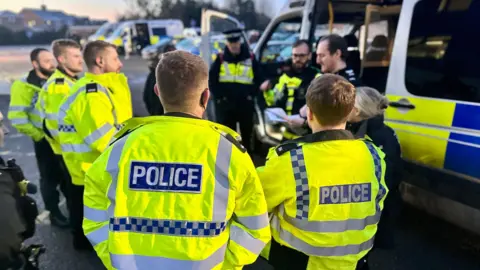
In Oxfordshire, some of the 120 additional officers deployed across the county targeted an organisation suspected of being involved in human trafficking and sexual slavery, after a long-running CID investigation.
The Eurobar & Hotel, known as the Oxo, in Oxford's George Street, was one of three places raided and searched simultaneously in the city on 14 January, resulting in two suspects being arrested.
Insp Neil Byrne said: "Today's operation was to try and disrupt and dismantle a crime group exploiting women in the Oxford area for sex work and looking to profiteer off the misery of others."
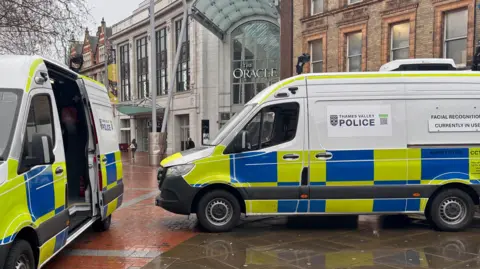
Facial recognition cameras were also deployed in High Wycombe, Milton Keynes, Oxford and Reading during the "intense activity".
Thames Valley is one of eight forces with the technology, which the Home Office aims to roll out to all police areas across the UK.
A watchlist of people wanted by the police is uploaded each morning the vans are deployed.
In Oxford, they made three positive identifications, including one from a custody image that was 15 years old.
Sgt Martin Smith explained how facial recognition software runs over the top of the CCTV feed, from two high definition cameras on the vans, pulling out images.
He said: "It will pair that face against the watchlist very, very quickly. If it doesn't match, it's deleted straight away.
"If it matches someone on the list, officers then move in to decide what action to take, so there's always a police officer that makes the decision, this is just an intelligence tool."
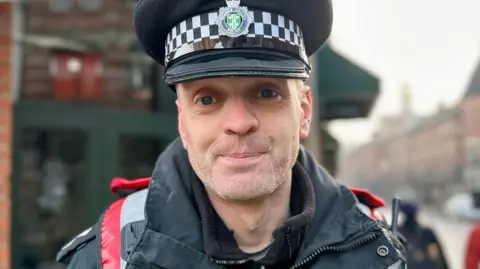
It was the first time the vans were deployed in Reading, where Supt Colin Hudson said officers spent time explaining the technology to the public.
He said people are generally "really supportive" once they realise only "wanted" people are being targeted and innocent people's images are deleted.
Among the 55 people arrested across the three days was someone suspected of being one of the Thames Valley's most prolific shoplifters, in Reading, who police said will be charged with 22 offences and 17 breaches of court bail.
ACC Murray explained the "show of strength" involved 200 extra officers on the ground, supplementing the resources that do "business as usual".
It involved "re-jigging" shift patterns and taking people away from jobs they would usually do.
He said: "This isn't about just blowing a load of cash to put extra bodies on the street. This is about harnessing the wider organisation and bringing them together so that we've got a larger number of people to do those things we want to do."
He added this was the first of a series of days of action to come.
You can follow BBC Berkshire on Facebook, X (Twitter), or Instagram.
