City faces being 'lowest funded', councillor warns

 JEFF OVERS/BBC
Major changes to local government funding will leave City of York Council with the lowest financial settlement of its kind in the country, the Labour-run authority has warned.
Ministers have said the changes, known as "fair funding", would "end postcode lotteries" and support areas most in need.
But City of York Council officials said that by the end of the new three-year government settlement, it would be "the lowest funded unitary authority per head of population in England".
Katie Lomas, senior councillor in charge of finances, said York lost out under the new formula because, despite having areas of "deep deprivation", they were smaller than its areas of "relative affluence".
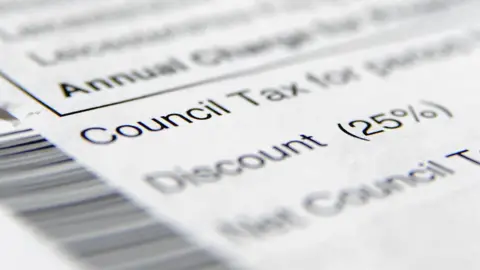
Lomas was speaking after a meeting on Tuesday saw senior councillors agree next year's budget proposals, including council tax rise of 4.99%, the maximum allowed.
The planned rise, which would add £86 a year to the average bill, will need to get final approval at a full council meeting next month.
'Bottom of list'
Lomas said that one of the revenue-raising problems York faced was the city's "lower than average" council tax rates.
"That means we're not able to charge as much as the funding formula assumes we can charge, and that further reduces the money we have coming in," she explained.
Lomas said that while she could never oppose a funding plan set up to tackle deprivation, it meant that "we have come at the bottom of that list - and for a relatively small authority like York that is a real problem".
"Our funding from the government is simply not enough. The pie just wasn't big enough after decades of local government being underfunded and undervalued," she said.
"But we are pulling forward against all these challenges to deliver a budget that does not cut the front-line services York's people want and need."
A government spokesman said ministers were making "almost" £198m available to City of York Council by 2029.
"That is an increase of 7.7% compared to 2024 and 2025," he added.
 Joe Giddens/PA Wire
However, York's opposition leaders said outcomes of the "fair funding" deal would hit the city - and its council taxpayers - hard.
Nigel Ayre, leader of the council's Liberal Democrat group, said the city had been given "the worst possible deal".
"We always knew there would be some redistribution, but the actual scale of the cuts to York's funding is off-the-scale, compared to anywhere else in the country."
The size of the financial settlement left York's residents facing maximum council tax increases every year until 2029, Ayre said.
"That's just to plug the gaps - not to enable us to grow. People want to see a return for what they are spending," he added.
Meanwhile, Conservative group leader Chris Steward said that for 14 years York's Labour politicians had said the city was being "badly treated" by Conservative governments.
"Now, with a Labour-run council, Labour MPs for York, a Labour government and even mayor for the region, we are seeing the worst ever funding settlement for York," Steward said.
'Right balance'
The government spokesman said funding reforms were needed because the previous system had led to "regional divides, postcode lotteries and sub-standard public services for too many people".
"This will make sure cash going to councils is shared out in a fairer way that follows needs and, alongside this, we've made almost £78bn available to England's councils this year," he added.
Claire Douglas, City of York Council's Labour leader, said the authority would continue "to deliver" on priorities like housing, the economy, transport and cost of living challenges".
"We will do that while ensuring we focus on important, everyday services. This budget, while incredibly difficult, achieves the right balance for our city," she said.
Listen to highlights from North Yorkshire on BBC Sounds, catch up with the latest episode of Look North.
