Should alcohol minimum pricing be introduced in NI?

 BBC
BBCThe health minister has said time is "quite rapidly" running out for the executive to introduce alcohol minimum pricing in Northern Ireland.
Mike Nesbitt is the fifth health minister to have attempted to introduce minimum pricing after it was first proposed by the Democratic Unionist Party's (DUP) Edwin Poots in 2012.
With an assembly election scheduled for next May, there is a limited time remaining for ministers to get legislation passed ahead of that date.
The first and deputy first ministers have been urged to help "turn the tide" on alcohol harm.
In a letter to Michelle O'Neill and Emma Little-Pengelly, the Alcohol Health Alliance (AHA) said urgent action is needed to save lives.
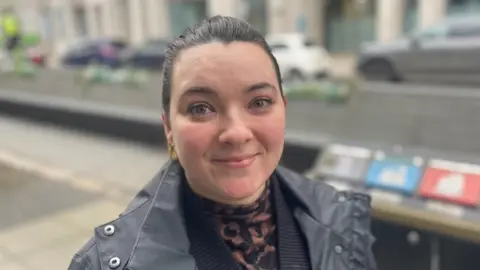
People in Belfast city centre gave their views on the proposal, with one woman, Sophie Crawford, saying she believes those who drink alcohol are "going to get it one way or another".
The pricing structure is already in place in Scotland and Wales where alcohol cannot be sold for less than 65p per unit.
If Northern Ireland introduced similar restrictions, it would see a 2.5 litre bottle of cider more than double in price from £5.99 to at least £12.20.
 Getty Images
Chief Medical Officer, Professor Sir Michael McBride, said there was "absolutely no doubt" that minimum pricing is effective in reducing consumption, alcohol-related harm and deaths.
'If people want a drink, they will get it'
Crawford said she understands "the logic of it", but added that "people who smoke, still smoke".
"If people want to get a drink, they're still going to find a way to do it. They might just end up sacrificing in other aspects," she said.
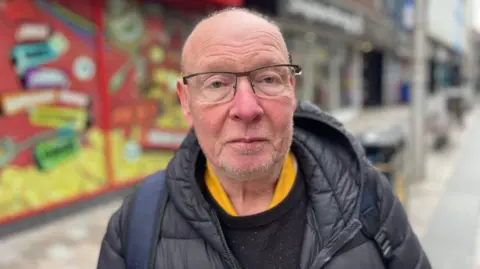
Tony Cusack thinks that "if you're going to drink, you're going to drink".
Cusack, who worked in a bar, said he remembers three men who told him "when you can't get three pints for a pound, I'm not drinking anymore. They were 28p per pint and they drank all their lives".
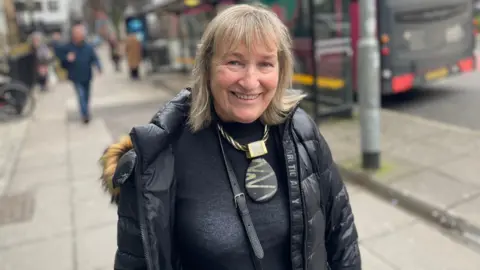
Carol Murphy doesn't drink, but thinks it's "not the wisest" move.
She said: "If you want your booze, you're going to go somewhere where you can definitely get it."
They will look "where it's the cheapest to go and purchase it but they will go looking for it".
'Alcohol consumption dropped 3% in Scotland'
The letter to the first and deputy ministers from AHA points to price controls as the best strategy.
The group represents more than 60 organisations, including medical experts, charities, and health organisations.
A spokesperson for the Executive Office said the letter is "currently under consideration".
Dr Sheila Gilheany, chair of NI Alcohol & Drug Alliance and chief executive of Alcohol Action Ireland, signed the letter and said the introduction of minimum pricing in Scotland saw a "reduction of 13% in deaths - that's about 40 lives that could be saved".
Speaking on BBC Radio Ulster's Evening Extra, Dr Gilheany said people working at the front line see "the absolute misery" of alcohol related deaths.
When asked about the alcohol industry claims of job losses, Dr Gilheany said "There was a really large evaluation done of it in Scotland and there wasn't job losses there."
She said alcohol consumption dropped by 3% in Scotland when minimum unit pricing was introduced.
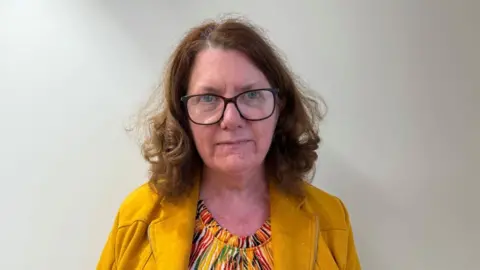
Dr Alastair MacGilchrist OBE, Consultant Gastroenterologist & Hepatologist, Chair Of Scottish Action on Alcohol Problems, said: "100% it does work, the predictions were that it would work for people who are the most disadvantaged.
He said alcohol deaths "very strongly favour people at the lower end of society".
"People drinking heavily target the cheapest stuff, minimum unit pricing very nicely targets the biggest drinkers and so this is a policy which was predicted to work and when we look at the evidence it absolutely does work," he said.
'Lives would have been saved'
 PA Media
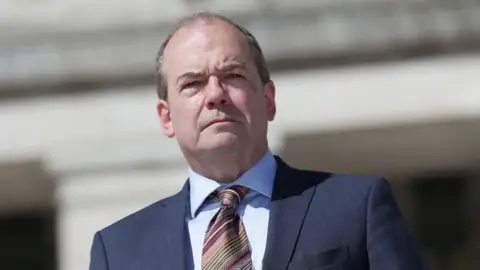
Sir Michael has urged Stormont ministers to consider the move, arguing "we are rapidly running out of time".
"It will reduce admissions to hospital from alcohol. It will reduce deaths directly attributable to alcohol, and the 130 odd cases of cancer that we see every year that are directly attributable to cancer," he told The View programme.
Since the measure was first proposed in 2012, there have been more than 3,700 alcohol related deaths recorded in Northern Ireland.
'Frustrated'
 PA Media
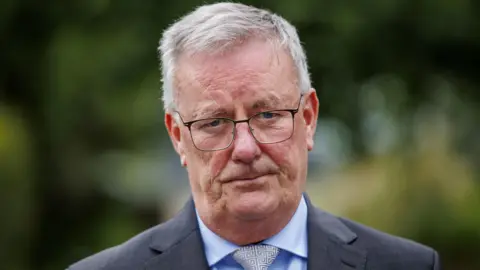
Nesbitt said he had submitted a number of papers on minimum pricing to his executive colleagues, but is "frustrated" that there has yet to be a substantive decision making conversation.
Three of the four parties in the power-sharing executive back the proposal, but the minister said some senior DUP members have told him they are against it.
"I'm not entirely sure why... I have asked, but I don't particularly understand the logic."
A spokesperson for the DUP said the party will engage with the health minister to "achieve proposals which can both achieve consensus and make the meaningful impact on alcohol related harm that everyone wants to see".
Nesbitt is obliged to provide an update to the Northern Ireland assembly by 6 April if he fails to introduce it by that date.
You can see more on the story on BBC The View at 22:40 GMT on BBC One Northern Ireland & BBC iPlayer.
