Lord Bath's surrogate-born son can benefit from estate

 Getty Images
Lord Bath's son can potentially inherit a share of Longleat family trusts despite being born to a surrogate mother in America, a court has ruled.
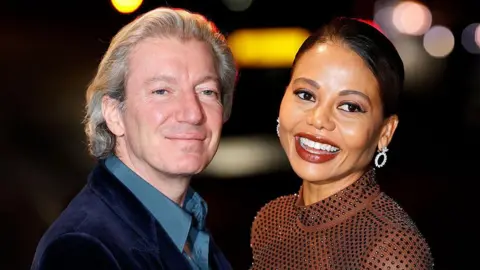
Ceawlin Thynn, the 8th Marquess of Bath, and his wife, Viscountess Weymouth, Emma Thynn, went to the High Court over "uncertainty" as to whether their son Henry could be a beneficiary due to the nature of his birth.
The family trusts use a pre-1970 common law definition of "child, grandchild and issue" that predates modern fertility treatments such as surrogacy.
But Judge Paul Matthews said he was "satisfied" Henry could expect to inherit after his elder brother John, "in the same way as any future legitimate naturally born sibling".
Henry is genetically the son of the Marquess, also known as Lord Bath, and his wife, Lady Bath.
Longleat has been in Lord Bath's family for 16 generations.
In a ruling published last week, Judge Matthews told Bristol Crown Court that Henry could reasonably expect to inherit after his elder brother and "take priority over any such subsequently born sibling".
'Unfair and unfortunate'
The judge said at this stage the trustees only wanted the power to add Henry as a beneficiary but not to exercise it yet.
"The first defendant and his wife consider it would be unfair and unfortunate if their second son and his issue were excluded from benefit," he said.
"A decision can then be taken at a later stage, in the light of appropriate advice, whether to exercise the power to add him."
He concluded he was "satisfied" that the court should approve the proposal and that the trustees have the power to do what they propose.
The ruling means Viscount Thynn will avoid having to decide whether to personally pay Henry in the future if he was excluded from the regular inheritance.
Follow BBC Wiltshire on Facebook, X and Instagram. Send your story ideas to us on email or via WhatsApp on 0800 313 4630.
