Mum who shared miscarriage experience on TikTok says baby loss still carries stigma

 BBC
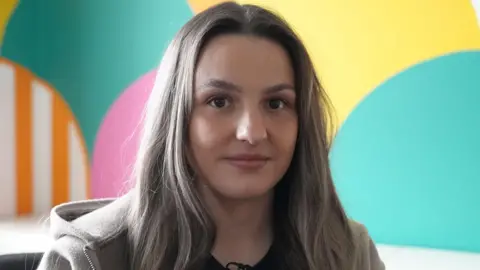
BBCA woman who lost a baby early in pregnancy says the experience was "really lonely" and that miscarriage still carries too much stigma.
Alaw Llyfni had a miscarriage at 11 weeks and felt there was little support afterwards.
She later shared her experience in a TikTok video which spread widely, prompting many to share their own stories.
A report by the Miscarriage Association found "major inconsistencies" in miscarriage care and support across the UK.
The Welsh government said it was working with charities to "standardise the provision for every family in Wales".
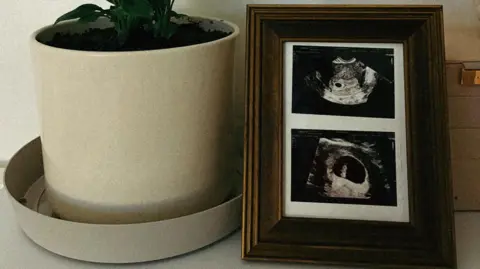
Llyfni said a scan revealed her baby's heart had stopped beating, leaving her and her partner, Gwion, heartbroken.
"I was just so shocked," said the mum-of-one, who lives in Benygroes, Gwynedd.
"I didn't want to accept that it had happened.
"I kept thinking, 'What did I do wrong?', I thought about everything I did - like what I had eaten, stuff like that."
Llyfni said the care she received on the day was "fantastic", but afterwards she was unsure what support was available.
"It feels a little bit like we've been pushed to the side," she said.
She said small gestures, such as a follow-up call from a midwife, a scan, or support groups, could make a big difference.
 Alaw Llyfni
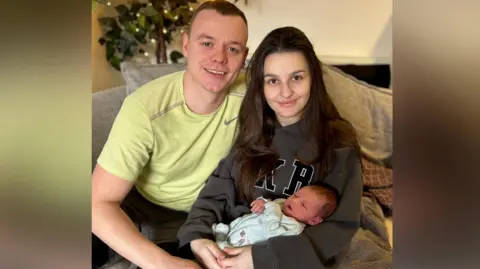
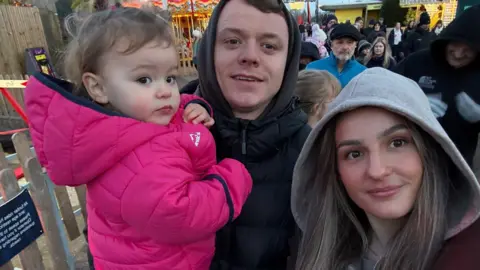
Llyfni said she still "sometimes has bad days", but feels "lucky" to have the couple's daughter, Nanw.
"We've always wanted two children, but after this experience, it's going to be a lot harder for me," she said.
Llyfni said social media provided valuable information and support, helping her realise that many others go through the same experience.
"I understand why people don't want to talk about it, because it's sensitive to people," she added.
"But I also think there's a stigma around it, it's not something you talk about - that you've lost a child."
She said she hoped that by sharing her experience on TikTok she could make a difficult time a little easier for others, adding that she was "more than happy" for someone to message her.
 Alaw Llyfni
Estimates of early miscarriage rates vary.
Some charities suggest it occurs in around one in six pregnancies, while others believe the figure may be closer to one in four.
Determining the exact number of cases is difficult because there is no formal system for recording them, and some women may not realise they are pregnant at the time of the loss.
Charities such as Sands have long called for a national recording system across the UK, along with greater collaboration between the devolved nations, so that data from different regions can be compared and tracked over time.
Fiona Hughes, from Anglesey, founded the charity Pluen Wen, believes there should be a national recording system for pregnancy loss.
The charity has campaigned for certificates to be issued for babies who are lost, regardless of how early in the pregnancy the loss occurs, which is a commitment the Welsh government has now agreed to implement nationally.
"It's important to record for research," Fiona said.
"Families and individuals need to know that research will be carried out using the data collected in each catchment area.
"Also it is important for that individual who has experienced the loss, to know that an official record is going to be kept."
 Alaw Llyfni
According to a recent survey by the Miscarriage Association charity - which questioned over 1,000 people across the UK - 65% said they did not receive enough care after a miscarriage, while 68% suffered mental health problems, grief and depression.
Although there were examples of good healthcare, 25.3% felt that care was inconsistent and varied between areas.
Vicki Robinson, chief executive of the association, said: "Too many women and their partners are being failed by a system that is inconsistent, unequal and too often determined by chance or circumstance.
"Lots of examples of good care exist and we are working to build on these through our free specialist training for healthcare professionals.
"But when support depends on where you live, who you talk to, or how well systems connect, too many people face additional physical harm and lasting psychological distress at an already difficult time.
"Change must be systemic."
A spokesperson for the Welsh government said "losing a baby at any stage of pregnancy is a very distressing experience" and "every health board in Wales offers emotional and physical support through the Early Pregnancy Assessment Units".
It added: "Our Mental Health and Wellbeing Strategy outlines how we will take a coordinated approach across government to improve mental health and wellbeing, including supporting people who have experienced bereavement.
"We continue to work with Sands to develop and implement national bereavement care pathways for miscarriage, stillbirth and infant loss.
"These are expected to be published shortly and will standardise the provision of support and care for all families in Wales."
