Seven local authorities set to hike council tax by more than 5%

 Getty Images
Seven English local authorities have been given permission by the government to increase their council tax by more than the 5% normally allowed to ease a "challenging financial position".
Most local councils are allowed to increase their share of tax bills by up to 5% - and must ask for residents' permission in a referendum before hiking it further.
But the seven councils have been given permission to bust the cap without a referendum when bills land on residents' doormats in April.
Three of them - Reform-controlled Worcestershire County Council, Liberal Democrat-controlled Shropshire and North Somerset, which is run by Lib Dem-led coalition - are likely to increase bills by 9%.
Authorities in Trafford and Warrington - both Labour controlled - and Lib Dem-led Windsor and Maidenhead have been allowed to raise their share of council tax by up to 7.5%.
Bournemouth, Christchurch and Poole Council, which is run by a Lib Dem-led coalition, can raise its share by up to 6.75%.
With the exception of Trafford, none of these areas are holding elections in May.
Local government minister Alison McGovern said the government had only agreed to "small additional flexibilities" in the seven areas to ease financial pressure.
"These additional flexibilities are a limit, not a target. Decisions on council tax levels are for local authorities," she said.
The cap-busting increases are lower than the seven councils requested "in almost every case", the government said, and people living in those areas will not see their bills "pushed above the national average".
Worcestershire is likely to prove awkward for Reform UK after the party promised to "reduce waste and cut your taxes" on leaflets in the West Midlands at last May's local election.
The council has warned it is facing effective bankruptcy and has also applied for a £71m emergency bailout from the government.
But council leader Jo Monk, who defected from the Conservatives to Reform before last year's elections, denied she had "lost control" of the council's finances.
"We have only been doing it for nine months. I think we have got hard job and we are going to do our absolute best to sort this mess out," she told the BBC.
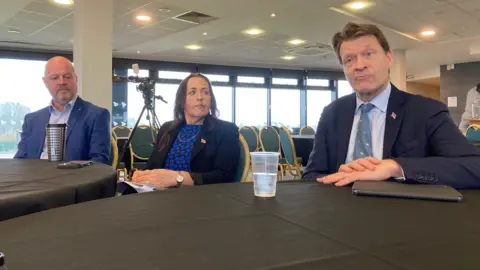
Reform's deputy leader Richard Tice took the unusual step of joining Monk and other council leaders at a media briefing on Friday, where he said Worcestershire was in the greatest financial trouble of the 12 councils it runs in England.
He said he was confident the council, which had asked for permission to increase council tax by up to 10% from April, would turn things round.
But his words were not enough to prevent Reform councillor David Taylor resigning from the party live on air on the BBC's Politics Midlands show on Sunday.
The Worcestershire county councillor said people in his constituency were "skint" and did not have the money "to pay for a massive upheaval in council tax".
A Reform spokesman said Taylor "has never been prepared to undertake the role of a councillor to the extent we feel is required" and resigned when challenged.
Worcestershire is one of about 100 local authorities in England to have applied to the government for Exceptional Financial Support.
The government is expected to write to councils shortly with their decision on funding.
The government has also announced an extra £440m in so-called recovery grants for councils in economically deprived areas - and an extra £272m to tackle homelessness.
"We promised to reconnect funding to deprivation and this final settlement delivers on that promise," said McGovern in a written statement on Monday.
"With more new funding, we're giving councils the certainty they need to plan ahead and transform services.
"Our purpose is to support families, tackle homelessness before it happens, and finally giving communities worst affected by historic cuts their fair share."
But Steven Broadbent, finance spokesman for the County Councils Network, said the funding had been "unfairly" targeted at urban and metropolitan borough councils - and county councils would be forced to increase tax and cut services.
The government also announced on Monday that it would be spending £5bn on writing off 90% of councils' historic debts relating to special educational needs and disabilities (SEND) support, accumulated up to April this year.
