PCC defies councillors to approve police tax rise

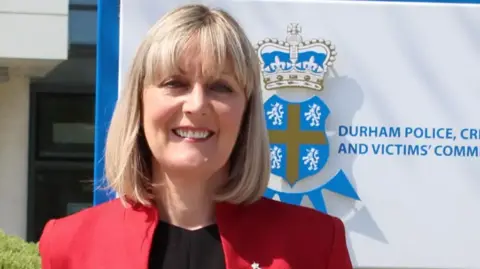 Durham Police and Crime Commissioner
A police and crime commissioner (PCC) has defied calls from concerned councillors and approved a 6% increase to the policing precept on council tax bills.
Durham PCC Joy Allen was allowed by the government to add a £3.50 "exceptional flexibility" increase to the proposed £15 police precept increase for Band D properties in 2026-27 - with other bands increasing in proportion.
Cross-party members of the Durham County Council's police and crime panel urged her to reconsider and limit the precept increase to £15, warning the extra rise would be too much for residents.
But the Labour PCC said it was needed to protect frontline policing and safeguard officer numbers.
Council tax is set for Band D properties, which are considered to be an average property size for comparison purposes.
Other bands are calculated from that benchmark.
In County Durham and Darlington, 80% of properties are in Bands A or B, the Local Democracy Reporting Service said.
Households in the Durham Police force area will see the policing element of their council tax bills increase by 24p a week for Band A properties and 28p a week for Band B.
Risking frontline services
The PCC had been granted powers to impose the additional £3.50 in response to concerns over the force's future.
At a meeting earlier this week, councillors were told a £15 increase alone would be insufficient and would result in a real-terms cut to policing, forcing greater reliance on reserves and putting frontline services at risk.
But the panel did not agree with the exceptional increase.
Allen said the precept rise would generate about £3.5m in 2026-27 and, without it, the force faced a projected £6.5m funding gap next year alone.
"For the sake of a few pence a week, the panel chose politics over people and policing priorities," she said.
"This decision strikes the fairest possible balance between affordability and public safety."
