Coroner calls for action after runner electrocuted

 BBC
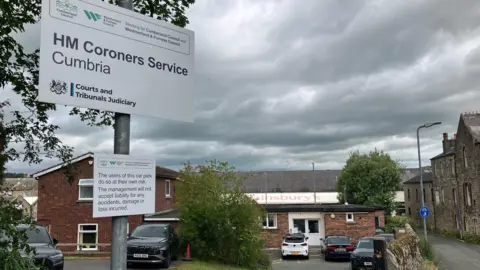
BBCA coroner has called for measures to make major electrical infrastructure safer after a runner was electrocuted.
John Oates, 29, known as Harry, died instantly when he came into contact with a low-hanging electricity cable in October 2023.
Kirsty Gomersal, senior coroner for Cumbria, said although this was the result of "rare and complex" circumstances, there was a "low" risk of future deaths.
She has written to the Energy Networks Association (ENA) asking it to take action and a spokesman for the organisation said it would work with its members to develop a plan aimed at "reducing the risk of such incidents in the future".
An inquest held in December heard the runner had come into contact with the live line on a public footpath in Lupton near Kirkby Lonsdale, Cumbria.
Gomersal's letter to the ENA is known as a prevention of future deaths report - a document issued when a coroner thinks action is needed to protect lives.
She said the low-hanging cable had fallen from its usual 26ft (8m) height after a double failure of two porcelain tension disc insulators, which meant the line remained live.
'Unknown fault'
The fault was caused by voids in the cement, the report said, however these were not known at the time, despite the insulators having been used since the 1950s.
The coroner said a double insulator failure had "not been known to previously occur", with witnesses called to give evidence at the inquest referring to it as "not experienced before", "complex" and "very unique".
An investigation by ENWL, which provides electricity in the county, found the voids were "introduced during the manufacturing process".
Gomersal's report said ENWL had not known about the low-hanging line until after the incident.
"Evidence was consistent that, at the time, there was no automated mechanism to detect a low-hanging line and that [the] electricity industry relied on low-hanging lines being reported by members of the public," she said.
In light of the death, ENWL brought in a number of measures to avoid similar incidents.
Gomersal said ENWL told her it had stopped using porcelain insulators and was rolling out a programme to replace them at about 8,000 locations.
Where there is a fault similar to the one that had occurred leading up to the 29-year-old's death, ENWL now carries out patrols of lines within 48 hours.
It has also developed a technology called Linesight, which can detect low-hanging lines and issues with insulators.
'Safety highest priority'
Gomersal said ENWL had shared its findings with regulator Ofgem and the ENA, but there was no evidence of what action other distribution network operators were undertaking.
She said while the ENA was not asked to attend the inquest or give evidence, she believed it could help prevent future deaths in its role as the energy industry trade body.
"This presents an opportunity for guidance to be given on re-assessment of risk and risk-reducing measures," Gomersal said.
The ENA, which supports electricity suppliers to deliver energy safely, has been given 56 days to respond to the report with a plan of proposed action.
A spokesman for the organisation said its thoughts were with the deceased's loved ones and its members were "carefully considering the conclusions of the report".
"We will work with our members to develop an action plan, embedding any necessary changes into our ongoing engineering, safety and assurance processes, with the aim of reducing the risk of such incidents in the future," they said.
They added safety was "the highest priority" for network operators in the UK, who were "internationally recognised as having one of the most resilient and safe energy systems".
