Nigerian author Chimamanda Ngozi Adichie 'devastated' by death of young son

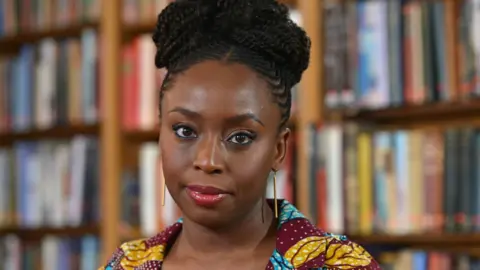 BBC
BBCOne of Nigerian author Chimamanda Ngozi Adichie's toddler twins has died, her family has confirmed.
An official family statement said that 21-month-old boy Nkanu Nnamdi, who the novelist had with her husband Dr Ivara Esege, died on Wednesday after a brief illness.
Issued on behalf of the family by Omawumi Ogbe, the statement said they were "devastated by this profound loss", and thanked well-wishers while also asking for privacy and prayers.
Award-winning US-based writer Adichie is known for works including Half of a Yellow Sun, Americanah and her 2012 Ted Talk and essay We Should All Be Feminists, which was sampled by Beyoncé on her 2013 song Flawless.
A key figure in postcolonial feminist literature, her work explores themes around gender and immigration.
In 2015, she was listed as one of Time Magazine's 100 most influential people.
Adichie, 48, had her first child, a daughter, in 2016. In 2024, her twin boys were born using a surrogate.
Nigeria's President Bola Tinubu is among those to have expressed their condolences, saying "no grief is as devastating as losing a child".
"I empathise with the family at this difficult time," he said in a statement on X.
In 2020, Adichie's 2006 novel Half of a Yellow Sun was voted the best book to have won the Women's Prize for Fiction in its 25-year history.
Speaking to the BBC last year around the release of her novel Dream Count, she stressed how she wanted her books to be read in Africa.
She also explained how the writer's block she had experienced while pregnant with her first child was "terrifying".
"It's a really frightening place to be, because writing is the thing that gives me meaning," the acclaimed author told Emma Barnett.
In 2022, in a BBC lecture on freedom of speech, the writer said young people were growing up "afraid to ask questions for fear of asking the wrong questions".
Such a climate could lead to "the death of curiosity, the death of learning and the death of creativity", she said during one of the BBC's annual Reith lectures.
"No human endeavour requires freedom as much as creativity does," she added.
