Exhausted puffins washing up on shore after storms

 BBC
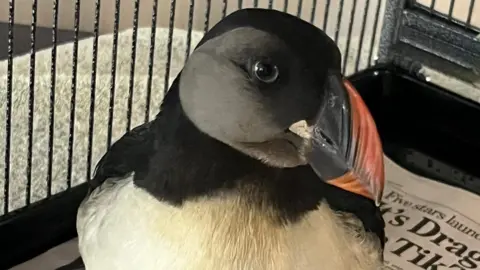
BBCPuffins exhausted from the recent storms have been washing up on beaches along Cornwall's south coast.
Cornwall Wildlife Trust's Marine Strandings Network said 14 puffins have been found already in February, compared to two in the whole of 2025 and 15 in 2024.
The weakened - and in some cases dead - puffins have been found on beaches in the Roseland peninsula, Falmouth, Penzance, the Lizard and Porthleven.
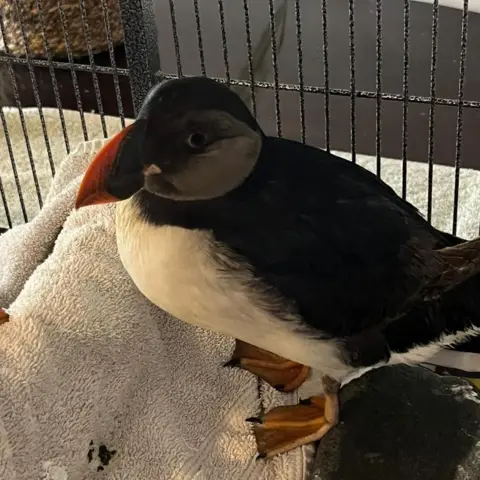
Jon Matthews, who helps to rehabilitate wild birds in Praa Sands, said the three puffins brought to him during the past week were "so weak" after they had been "battered by the storms and hadn't been able to eat".
 Rosemullion Veterinary Practice/CVS Vets
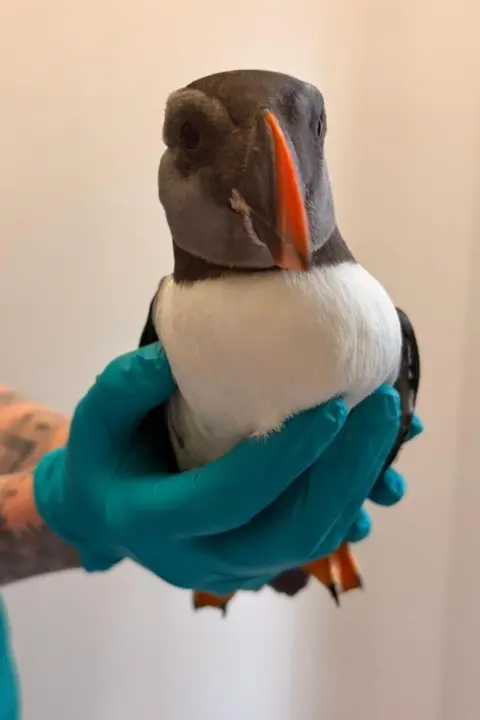
Matthews said one of the puffins had died but the remaining two - Pedro and Pickle - had been checked by Rosemullion Veterinary Practice for bird flu for which they had tested negative.
He said he was hand feeding them and keeping them warm "until the oil is right on their feathers and they're a good weight".
"Both are putting on weight and eating well," he said.
Hannah Wilson of Marine Discovery Penzance, a wildlife tour and research company, said puffins spend the autumn and winter at sea before they head inshore to their colonies in spring.
She said: "It's been the most stranded since 2014 which was the memorably stormy year.
"That year, 90 of them came ashore and those are the only ones recorded - it could be the tip of the iceberg.
"The sea has been rough for ages and puffins forage using their eyesight so they've got to have a bit of water clarity in order to hunt properly and that just isn't there."
Matthews said the next step would be to get them bobbing around in water before they would be released in good sea conditions, which he hoped would be in about two weeks time.
Wilson said people who find a sick or injured bird should put them in a box while wearing gloves to avoid damaging the oil on their feathers and contact a local vet.
Anyone finding a dead wild bird should report it to the Department for Environment, Food and Rural Affairs, she added.
Follow BBC Cornwall on X, Facebook and Instagram. Send your story ideas to spotlight@bbc.co.uk.
