Thatched cottage hopes to offer visitors a toilet at last

 Cruck Cottage Heritage
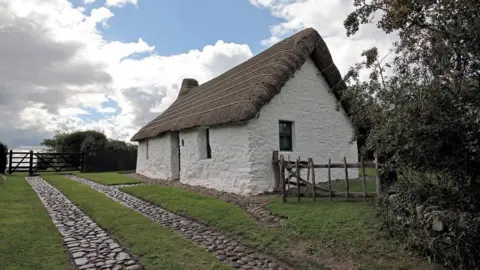
The last remaining thatched cottage of its kind in south-west Scotland is hoping to upgrade its visitor offering - to include running water and a toilet.
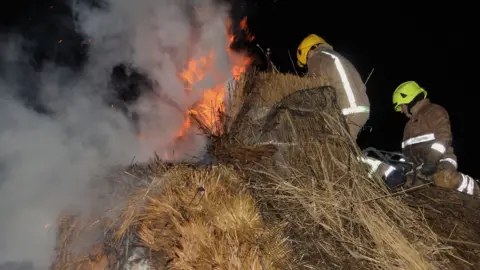
The A-listed Cruck Cottage at Torthorwald in Dumfries and Galloway - which operated as a museum - has been opening more regularly in recent years after being badly damaged by fire in 2018.
However, Sue Hughes - who chairs Cruck Cottage Heritage (CCH) that runs the site - said the rise in profile had led to a "few challenges".
The organisation now hopes to get permission for a small building in the museum grounds which would contain a toilet, utility room and storage area.
 Bill Meadows
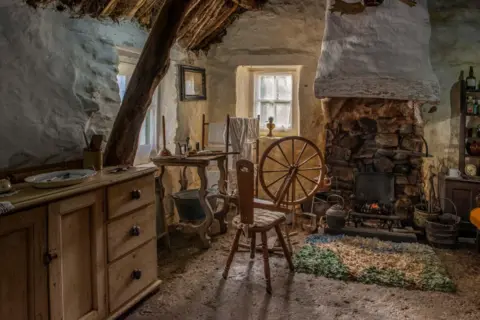
The cottage gets its name from the oak "crucks", or trunks, which support the roof and are laid with heather turf and thatched with rye straw.
It is the only remaining building of its kind in the area and dates back to the mid-1700s.
It was badly damaged by a fire eight years ago but CCH - the group of volunteers who manage it - are now able to stage more regular daytime and evening events.
"We have had so much interest in the cottage from both locals and visitors to Dumfries and Galloway," said Sue.
"However, with the rise in profile we have also encountered a few challenges around providing a real Scottish welcome.
"The main issue is that we have no toilets or running water."
She said a recent survey had identified that many people thought that should be a part of any future plans.
"The lack of facilities also creates barriers to volunteering, limiting the time people can give, and limits our options to welcome school groups, community groups and for evening events," she said.
"The lack of access to water also makes it difficult to offer refreshments or to carry out activities which may require it - such as for washing hands."
CCH has now applied to Dumfries and Galloway Council for a small building to house an accessible toilet, utility room and store area.
 Cruck Cottage Heritage
"We intend for this building to not only visually fit within the context of the historic cottage, but also be as environmentally-friendly as possible," said Sue.
"In tandem to the development of the building we also plan to deliver a programme exploring environmental sustainability and heritage skills using the cottage building and its maintenance as inspiration.
"Our first step on this journey is to apply for planning permission to gain a well thought-out scheme which will allow us to secure funds to realise this ambition."
