One year on: The legacy of the asylum barge

 EPA-EFE/REX/Shutterstock
A death, a series of protests and a legal challenge are the enduring legacy of an asylum accommodation barge and its impact on a community - one year after it was towed away.
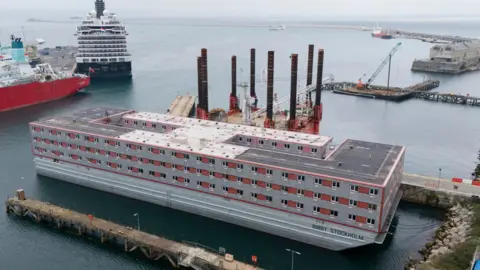
The Bibby Stockholm arrived at Dorset's Portland Port in July 2023, four months after the Conservative government announced that the island would become the first place in the country to house asylum seekers on a barge.
Designed as a temporary measure to ease pressure on the asylum system, the vessel accommodated up to 500 single adult men aged 18 to 65 at any one time.
When the Labour government won the general election in July 2024, cancelling the scheme became one of its first decisions - and it left Portland on 30 January 2025.
Looking back on the period the barge was there, Dorset Council leader Nick Ireland said he did not believe any more could have been done to prevent its arrival.
"It was quite literally imposed on us - the council received an email to say a barge is coming and this is what it is for."
He said that the council's position was that it was always in the wrong place at the wrong time.
"Once it arrived we did what any responsible council would have done and mitigated the risks and made sure we worked with our communities," he said.
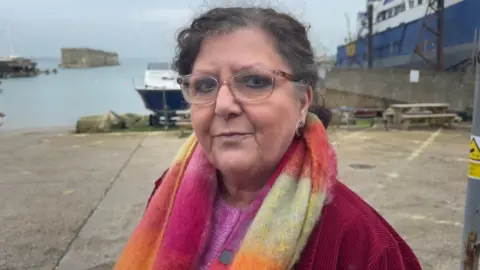
The former mayor of Portland mounted a legal challenge against the Home Office because she believed the barge did not comply with planning rules.
Carralyn Parkes, who brought the case as a local resident, served papers to the government in August 2023.
In May 2024, a High Court judge ruled that the barge was not subject to council planning law because it was not on land.
Parkes said the legal challenge was not a waste of time.
"We lost the battle but we won the war," she said.
"The Home Secretary and Rishi Sunak, the former Prime Minister, wanted to see barges and cruises ships up and down the country accommodating asylum seekers.
"But, because of the stance that we took and the fuss that we made over the legal challenge, we stopped that.
"Whilst we didn't stop the Bibby Stockholm, we did stop Bibby Stockholms up and down the country and I am proud of that."
The journey of the asylum barge
From the beginning, Dorset councillors condemned the plan, with one describing it as "a devil's deal".
Protests took place on Portland throughout the summer.
One Saturday in July 2023 saw a Stand Up to Racism rally, while the No to the Barge group held a separate march.
Much of the opposition focused on concerns about local services and conditions on board the vessel.
The then Archbishop of Canterbury also joined calls for the government to delay the plan.
And shortly after the first group of asylum seekers boarded in August 2023, traces of legionella bacteria were found in the water system.
The men were moved off the barge and sent to a hotel in Devon.
 Handout
Two months later, the UK Health Security Agency deemed the vessel safe
Over the following months, more men embarked, with numbers peaking at around 490.
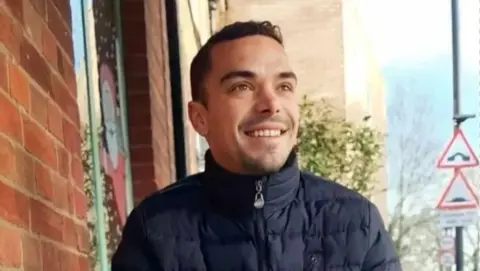
In December, an asylum seeker died on the barge.
Twenty-seven-year-old Albanian Leonard Farruku was believed to have taken his own life.
Refugee charity Care4Calais and volunteer group Portland Global Friendship Group later held a vigil at the port.
Nearly a year later, the final eight men living onboard were removed and the vessel was shut down.
