Sugar glider siblings find new home at college

 North Lindsey College
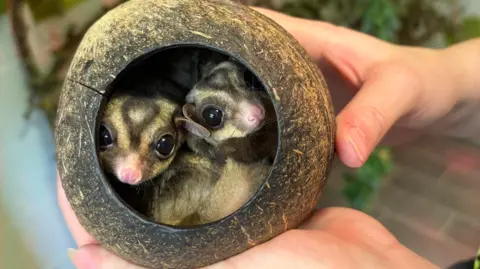
Two sugar gliders have been adopted by a college to help students get "invaluable" learning experiences.
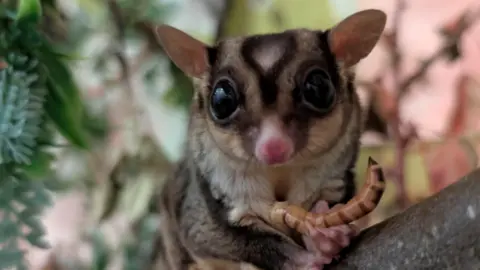
North Lindsey College, in Scunthorpe, has welcomed the pair of six-year-old possums, called Bobby and Mo.
The college said it hoped the brothers would enable students to gain hands-on experience of caring for the specialist animals.
Louise Davey, team leader for animal management at DN Colleges Group, said: "We are absolutely delighted to welcome these amazing animals to our collection. Our team has worked closely with the keepers at their previous residence in order to settle them in with us as smoothly as possible."
 North Lindsey College
She added: "Having them as part of our collection means the students get a wide variety of experience during their studies."
Sugar gliders are nocturnal animals and have a thin membrane of skin creating "wings" that allows them to glide through tree tops for distances of up to 148ft (45m).
They are native to Australia, New Guinea and Tasmania, and have a life expectancy on average of between 10 to 15 years.
Bobby and Mo joined the college after being adopted from a "popular tourist zoo".
It added that the brothers have settled in "extremely well".
Presley, a level 3 animal management student, said: "It adds more diversity to our animal unit. Since they are a nocturnal species, we don't get to see them too often, but when we do it's an awesome treat."
Listen to highlights fromLincolnshire on BBC Sounds, watch thelatest episode of Look Northor tell us about a story you think we should be covering here.
Download the BBC News app from the App Storefor iPhone and iPad orGoogle Play for Android devices
