How art therapy could cut staff burnout risk
 BBC
BBCArt therapy sessions could cut the risk of burnout by half, a study of London medics suggests.
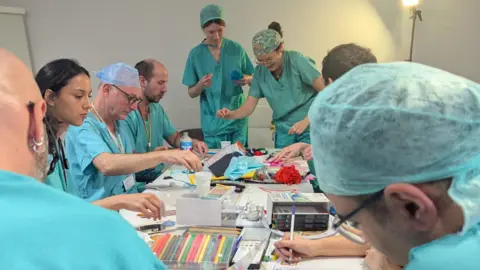
Researchers from Queen Mary University of London and Barts Health NHS Trust worked with 129 doctors, nurses and other health professional from London hospitals to study the effects of group art therapy sessions.
They found that those who took part in the sessions reported "much lower emotional exhaustion and depersonalisation, and less stress, anxiety and depression".
Art therapy has since been rolled out across five hospitals in London - with researchers saying it could be used to help tackle burnout in other professions too.
For the study, described as a first of its kind, half of the participants took part in weekly group art therapy sessions, while the other half were on a waitlist.
They were surveyed before and after six sessions of art therapy.
Those who did not receive the art therapy reported feeling around twice as burnt out as those who did.
The trial also found that the benefits lasted at least three months after the therapy ended.
So how does it make a difference to medical professionals?
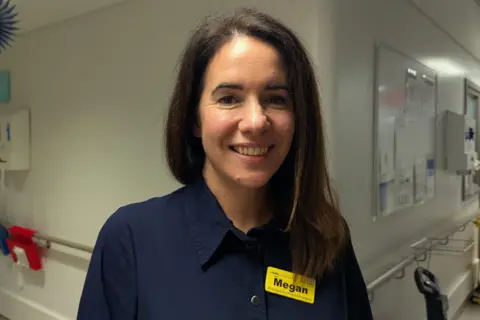
Megan Tjasink, principal art psychotherapist at Barts Health NHS Trust, who was behind the study, explained: "While they're very good at solving problems in a rational way, they can be less well practised at processing feelings.
"And due to the nature of their jobs, there are a lot of intense and difficult situations they'll be dealing with every day.
"Using the art therapy method helps people to communicate with colleagues in a very different way and to share feelings that might otherwise be difficult to express."
Ms Tjasink said the sessions were run by a trained psychological professional "so when difficult emotional material comes up, it can be processed safely".
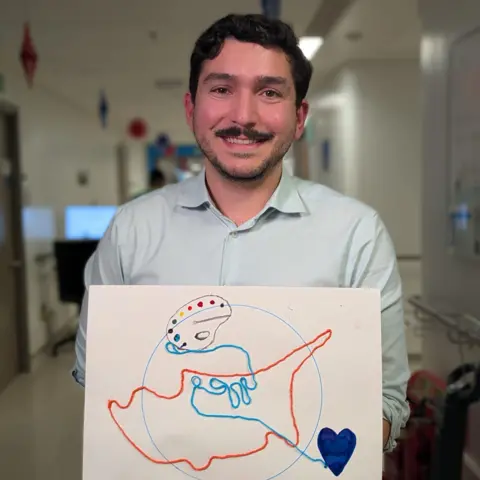
Oncologist Dr Umur Guven, who attended several of the sessions at St Bartholomew's Hospital, said: "They definitely helped me.
"Our shifts are so busy, but this gives us time to pause, to remember we are human again and to express our feelings through art."
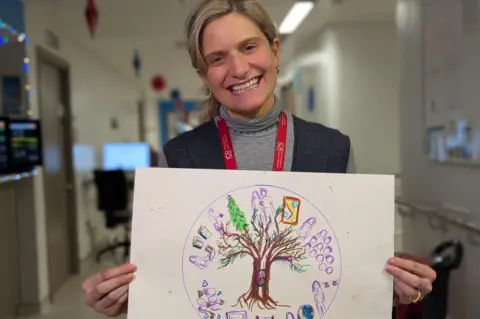
Dr Lani Walshaw said she felt benefits after her first art therapy.
"Working in oncology is obviously quite emotionally challenging," she said.
"We see a lot of difficult disease and patients going through the hardest times of their lives.
"To take some time out from that to do these art sessions is really therapeutic."
"With our busy shifts, you can feel isolated," added anaesthetist Dr Francesco Rosato.
"In these sessions when you find out others share the same feelings as you, you don't feel alone anymore."
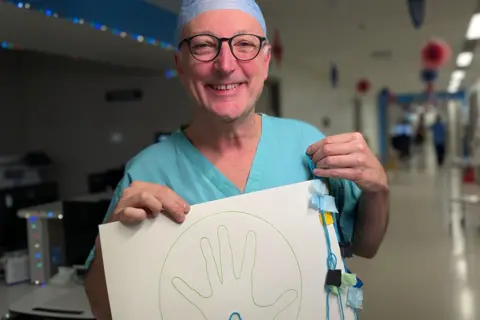
"I have found art therapy very useful myself," said consultant anaesthetist Dr Giampaolo Martinelli, who worked on the study with Ms Tjasink at St Bartholomew's Hospital.
He said: "The session is protected time where I come in here and I feel like I'm in a suspended space, completely different from the hospital, where nothing else matters apart from me."
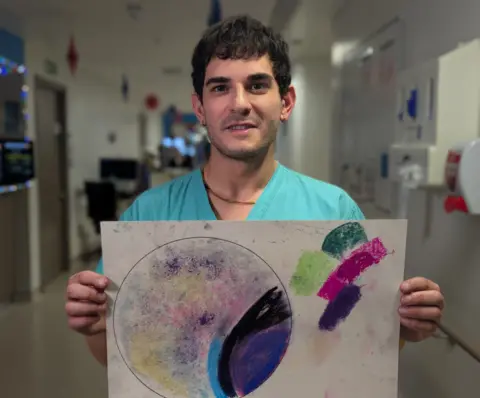
Ms Tjasink said their findings could go beyond the medical sector: "Burnout is an issue across numerous professions such as teaching and social care, and in the corporate sector.
"Group art therapy could make a difference there too."
But, she said, art therapy was not a cure-all: it must go alongside other tools to deal with burnout and mental health pressures.
The sessions are funded by Barts Charity.
Following the successful pilot, they have been rolled out for staff across five hospitals in the Barts Health NHS Trust.
Listen to the best of BBC Radio London on Sounds and follow BBC London on Facebook, X and Instagram. Send your story ideas to hello.bbclondon@bbc.co.uk
