Women share pride in their ancestry in documentary

 Jimmy Osayamwen
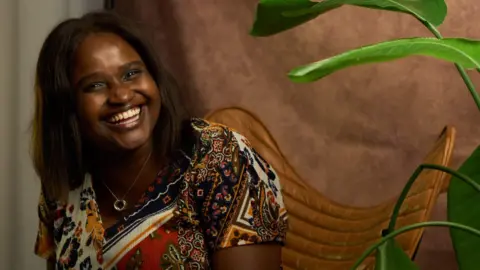
A woman born in Rwanda, now living in Bristol, has created a documentary about "what it means to have pride in your heritage and ancestry".
Former carer Louise Ndibwirende, 37, made the film after being accepted onto a creative programme run by the Black South West Network (BSWN), a racial justice charity based in Bristol.
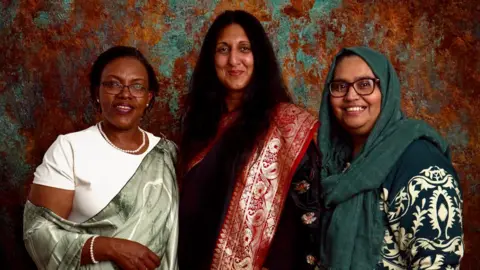
The documentary, Rice at Home, tells the story of three women who have roots in Rwanda, India and Bangladesh, and will be shown at Watershed on Saturday.
"I nearly didn't do this film because I thought it was just a niche feeling for me, but the world needs more of our stories out there, and they need to be told by us instead for us," Ndibwirende said.
"We'd actually all be surprised how our own lived experience can be so relatable and so healing and encouraging for others," added Ndibwirende who was adopted by a French couple when she was three years old and later moved to England.
"Rice at home" is a well-known African saying which signifies that an abundance of what people need is already around them, Ndibwirende explained.
 Jimmy Osayamwen
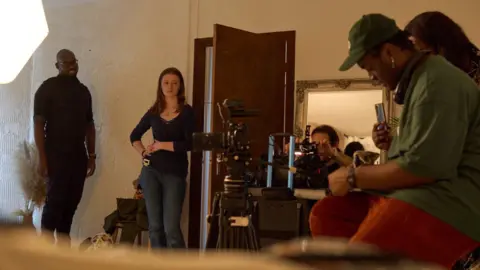
The film was produced by Martha Redfern, a Bristol-based producer specialising in telling women's stories.
It brings together the three women through discussion of culture, religion and assimilating while staying connected with their roots.
Ndibwirende said: "I'm just excited to see the audience reaction, how they feel and hearing how they expand on their own stories."
 Jimmy Osayamwen
Fidesi Murica, 52, a support worker from Rwanda who features in the documentary, was born in a refugee camp in Uganda, she now lives in Bath.
With shared roots in Rwanda, Ndibwirende said it was "really important", for her to have someone who represented her own cultural heritage on screen.
Murica said: "I grew up with a passion that I had to feel because of what we were going through, being rejected, being discriminated, being bullied, being hated."
But through filming the documentary, she said, she found "a way you can help each other, you encourage each other".
Bristol-based Shoba Ram, 45, a consultant in drug policy and harm reduction who met Ndibwirende while taking part in a leadership program, discusses her Indian heritage in the film.
She said being a part of Rice at Home was, "a really phenomenal experience [...] we didn't know each other, but we connected".
"I think it's a conversation that can be so diluted, and it's important to say that people can open those doors to become part of a culture," she added.
Career coach Rayhana Rahman, 56, who previously mentored Ndibwirende, discussed her Bangladeshi culture in the film.
"It feels really refreshing to remind people that this culture that you have, or this faith that you have, is valuable and is worth celebrating and recognising," she said.
Follow BBC Bristol on Facebook, X and Instagram. Send your story ideas to us on email or via WhatsApp on 0800 313 4630.
