First electric HGV crosses Channel Tunnel

 BBC
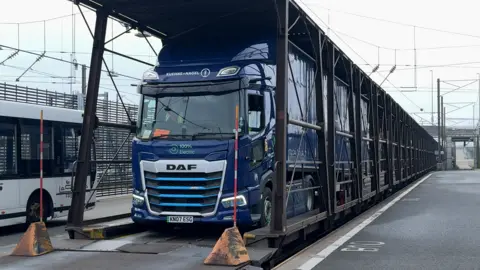
BBCThe first electric heavy goods vehicle (eHGV) has crossed the English Channel on a LeShuttle freight train.
It is part of a government and industry-wide bid to reduce haulage greenhouse gas emissions.
The vehciles can already travel to France via ferry, but the Channel Tunnel requires specific safety protocols for large electric vehicles.
The process has now been finalised, and eHGV travel will be rolled out commercially later this year.
Peter Roberts, LeShuttle Freight commercial strategy director, admitted that eHGVs still make up a small proportion of the market.
He said the demand was growing, and he expected 50,000 truck crossings to be electrified in five years' time.
"It's really important for logistics as we grow our decarbonising strategies as an industry," he said.
About 25% of the UK's trade with the EU travels through the Channel Tunnel each year.
In 2025, a total of 1,163,124 HGVs used LeShuttle.
Kate Broome, sustainability and social impact director for logistics company Kuehne+Nagel, said it marked the first UK-EU "electric corridor" for freight transport.
The eHGV began its journey in the East Midlands, ending in northen Germany and carrying 12 tonnes of cargo.
The vehicle can be driven up to 300 miles (482km) on one charge.
The trucks charge fully overnight, and at regular intervals during the drivers' breaks.
"You just have to plan accordingly," driver Adrian Szewczyk said.
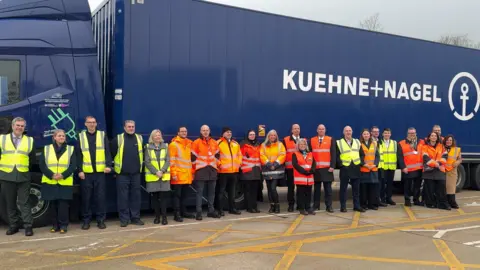
Phil Moon, from truck manufacturers DAF, said the challenge now was making eHGVs appealing to the industry.
"Typically electric trucks will cost more to buy than diesel," he said.
"But over a long lifetime, say a five year period, you actually reduce your cost of operating."
At the start of this year, the government announced plans to discount eHGVs by up to £120,000.
