AI lets botanic garden visitors chat to plants

 Lloyd Mann/University of Cambridge
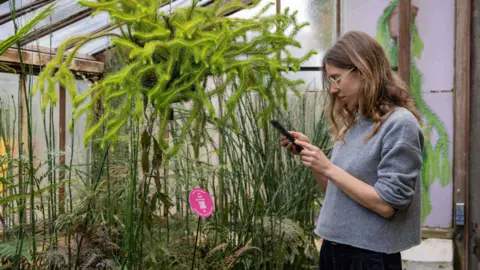
Artificial intelligence (AI) is being used to let botanic garden visitors chat to 20 plants and get responses.
Cambridge University Botanic Garden said its exhibition, Talking Plants, was a "world first for plants" and a "playful way" to let people ask questions about evolution, ecology and cultural significance.
Each plant has been given its own name and personality, including "Jade, the Vine, the sassy ceiling-swinger of the Tropics House" and "Titus Junior, the Titan Arum, blunt, dramatic and famously foul-smelling".
Prof Sam Brockington, exhibition curator, said it was "not about replacing our human expertise", but about "finding new ways to stimulate learning".
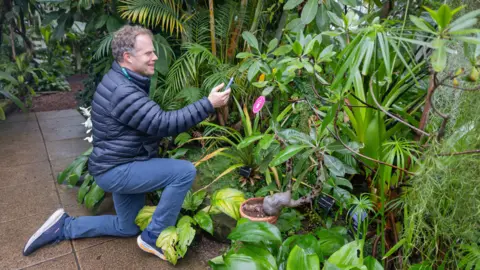
The gardens said each visitor can have a two-way conversation with the plants by scanning a code that opens a chat-box on their phone.
The conversations can be voice or text-based, with the plants able to reply to questions.
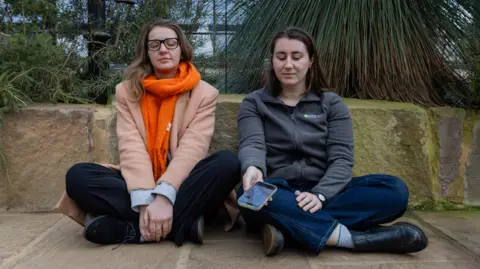
Meditation sessions and trivia games are also part of the experience.
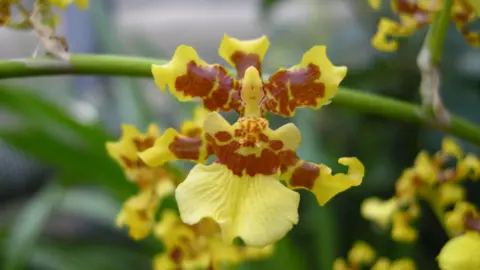
Other plants that can "talk" include Tumbo the Welwitschia, characterised as "dry-witted and defiantly stubborn", and St Helena Ebony, who is "dignified, deeply tied to her home and a survivor against the odds".
 Cambridge University Botanic Gardens
 Lloyd Mann/University of Cambridge
Brockington, who is a professor of evolution at Cambridge University, said the use of AI in the exhibition was "not about replacing our human expertise, but about finding new ways to stimulate learning and wonder about the plant kingdom".
"We hope it will give us new insight into how to best engage people with important messages about biodiversity loss and environmental change, which will influence all our learning programmes."
Gal Zanir, co-founder and chief executive of Nature Perspectives which developed the exhibition alongside the gardens, said it was a new way of "relating to the living world".
"We're shifting from learning about nature to learning from and with it," he said.
 Lloyd Mann/University of Cambridge
AI has previously been used at the university's Museum of Zoology, which in 2024 let visitors have two-way chats with animals on display.
Answering whether the AI could respond incorrectly and make up replies from the animals, Zanir told the BBC the technology was "fine-tuned" on a curated set of scientific data selected by its team of ecology experts.
The new botanic gardens exhibition runs from 11 February to 12 April.
Follow Cambridgeshire news on BBC Sounds, Facebook, Instagram and X.
