I turned myself into an AI-generated deathbot - here's what I found

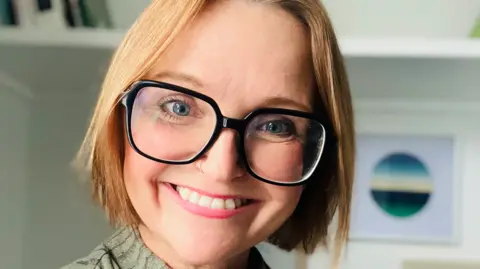 Dr Jenny Kidd
If a loved-one died tomorrow, would you want to keep talking to them?
Not through memories or saved messages, but through artificial intelligence - a chatbot that uses their texts, emails and voice notes, to reply in their tone and style.
A growing number of technology companies now offer such services as part of the "digital afterlife" industry, which is worth more than £100bn, with some people using it as a way to deal with their grief.
Cardiff University's Dr Jenny Kidd has led research on so-called deathbots, published in the Cambridge University Press journal Memory, Mind and Media, and described the results as both "fascinating and unsettling".
Attempts to communicate with the dead are not new.
From séances to spiritualist mediums, similar practices have existed for centuries.
But as technology advances, AI has the potential to make them more convincing, and far more scalable.
 Getty Images
In 2024, James Vlahos told the BBC how he recorded his dad's voice and created an AI chatbot after hearing the devastating news that he was dying from cancer.
He described how wonderful it was to keep a sense of his memory alive, and while it didn't remove the pain of his death, he added: "I have this wonderful interactive compendium I can turn to."
The Workplace Bereavement support group said it was not seeing widespread use of deathbots, but more curiosity from people.
"These deathbots and AI tools are only as good as the information they are given," said founder Jacqueline Gunn.
"They don't grow or adapt in the way grief does. For some they may offer a stepping stone, but they cannot be the destination.
"Grief is a deeply personal human response to death, needing time, understanding and human connection."
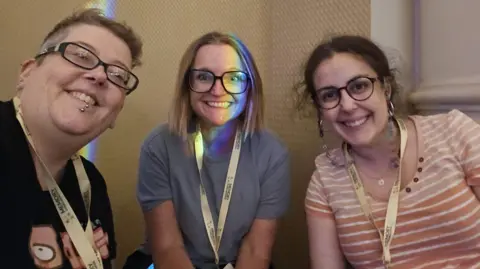
Working with Eva Nieto McAvoy from King's College London and Bethan Jones from Cardiff University, Kidd explored how these technologies function in practice.
They looked into how AI systems are designed to imitate the voices, speech patterns and personalities of people who have died, using their digital traces.
While they are often marketed as sources of comfort and connection, the researchers say they rely on a simplified understanding of memory, identity and relationships.
 Dr Jenny Kidd
Kidd's interest in the topic began during the Covid pandemic, when there was a sudden flood of AI-generated animated photographs on social media.
People were uploading old photographs of ancestors, then watching them blink, smile and move their heads as software "reanimated" their loved ones.
"These things were really creepy, but really quite interesting as well," Kidd said.
"All of a sudden they were everywhere and millions of people were sharing them.
"That was us stumbling into this kind of work of AI revival."
'I sounded Australian'
The team decided to test some of the deathbots for themselves and explored four commercial platforms.
"It was weird interacting with ourselves in that way but largely unsatisfying because of the technical limitations of these platforms at the moment," said Kidd.
In one experiment, Kidd used her own voice data to create a chatbot.
"It didn't sound like me, in fact it it sounded quite Australian," she added.
Kidd believes the technology will improve, but she is sceptical about whether a large market will emerge.
"We already have a lot of established rituals and traditions around death," she said.
"The fact that there hasn't really been a take-off technology in this space maybe indicates there isn't much of a market for it."
When asked whether they would want their own families to recreate them digitally after death, the researchers had mixed feelings.
"My initial gut reaction is if they want to do that and it's kind of playful, that's fine," Kidd said.
"But if there's any sense to which, certainly in the future, the persona continues to evolve or says things that I would never say, or has allegiances I would never have, and this begins to mangle people's actual recollections of me and my values then I think I would have a big problem."
Dr Nieto McAvoy said she was not "particularly bothered".
"I'm not very religious and I don't have strong thoughts about the afterlife, once I'm dead, who cares?
"If it helps them, you know... but it can be misconstrued for sure. And do I want my family to pay for a service... I don't know, it's complex."
