Council shares 'gritting mythbuster' after confusion

 Paul Campbell/PA Wire
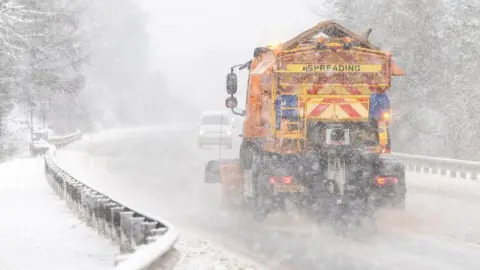
A council has shared a "gritting mythbuster" after many motorists complained that some roads appeared to have not been prepared for snow and ice.
Liverpool City Council has been accused of failing to grit some main roads in time for the recent icy blast.
However, in a statement, the authority said 372 miles (600 km) of roads had indeed been gritted over the past two days - but shared a list of reasons for some of the potential confusion.
It also posted details of common myths about gritting and how it actually works on X and said it would continue over the coming days.
"Once grit salt is laid on the road, it requires the movement of traffic to help work it into the ice," the council said.
"When there are low traffic levels, roads can remain icy for some time."
 ADAM VAUGHAN/EPA/Shutterstock
The council said common misbeliefs included that adding salt to the road means the ice instantly melts.
It explained how gritting is only the start of the de-icing process and that traffic moving over it is needed to make help clear the snow and ice.
It said another myth was that salt on the road stops new ice forming.
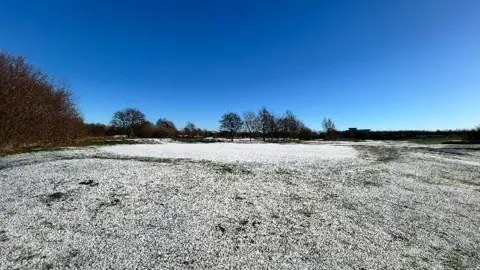
The council said salt lowers the freezing point of water and does help prevent ice from forming on roads when temperatures drop below 0°C. However, it loses its effectiveness at -5°C and stops working at -10°C.
 Greyman/BBC Weather Watchers
Neighbouring Sefton Council had also faced accusations of not gritting but confirmed it had gritted about 290 miles (470 km) of roads across the area.
A spokesman echoed the Liverpool advice and explained how gritters are deployed when the road surface temperature drops below 0°C.
"We have been out gritting on a number of occasions over the weekend, including three times on Sunday, and have spread over 150 tonnes of grit. We have also been out again today," he said.
"Gritting helps prevents the formation of ice at 0°C, but doesn't prevent snow from settling on the road, and during extended periods of sub-zero temperatures and snowfall the effectiveness of the grit can be diminished.
"Last night some Sefton roads reached as low as minus 7°C, below the temperature at which grit works best, which is down to minus 5°C."
He added that weather conditions were being monitored "24 hours a day, seven days a week" as part of its Winter Maintenance Policy.
'Report it'
Liverpool City Council also responded to claims some community grit bins in the city had been empty.
Community grit bins are large yellow containers on public roads and footpaths which are provided to help local people keep public areas safe from ice and snow.
"There are 191 grit bins across the city, which are refilled twice over winter," it said.
"If they run out of grit salt between refills, people can report it to us, and we will refill them as soon as possible. This should only be used for pavements and other public footways."
The authority said crews also grit pedestrian parts of the city centre and hand grit key footpaths.
Listen to the best of BBC Radio Merseyside on Sounds and follow BBC Merseyside on Facebook, X, and Instagram. You can also send story ideas via Whatsapp to 0808 100 2230.
