'My brain injury keeps getting me sacked'
A man who suffered a catastrophic brain injury in a car accident 10 years ago says he has lost several jobs as the incident left him with a lack of inhibition.
Nick Atherton, 33 and from Cheltenham, says he has been sacked for things such as saying inappropriate things to colleagues or rolling his eyes while taking instructions from senior staff.
Charity Headway has called on employers to be more aware of how people with acquired brain injury (ABI) can behave.
The Gloucestershire-based charity says a lack of awareness of their symptoms makes it more likely that people living with brain injury will face unstable employment.
Nick, who works in hospitality, said: "A habit of mine has always been to look away from all outward distractions, so I can think clearly of a response to your question, and I look upwards to think.
"And that can be seen to be rolling my eyes, but I don't intend it that way. I am rolling my eyes at my own brain's inflexibility."
He added: "I say what comes into my head, because I want to say it before I forget it. And then I go 'agh-I shouldn't have said that'. But once it's out, it's a bit too late."
Nick was driving home after a late shift when he was involved in the crash. His long road to recovery was featured on a BBC Sounds documentary in 2021.

 Nick Atherton
Despite loving working front-of-house and his work having been praised in his last job, complaints were made after he asked colleagues who were in a relationship together if they were "cuddle buddies", and also by a younger colleague after he "jokingly" said "good girl" after she helped him.
"I am aware, in retrospect, the manner in which that can be taken, and it wasn't appropriate," he said.
When Nick appealed against losing hisjob, his employer admitted not following correct disciplinary procedures, but stood by the decision to sack him.
Nick said that he informs employers of his injury during interviews, but "then people fail to work around or inform their staff of my limitations".
Multiple symptoms
Experts have outlined many ways that a Chronic Traumatic Encephalopathy (CTE) can affect people.
Being disinhibited is a classic symptom of head injury. Other symptoms include severe mood and personality changes.
These changes can include depression, aggression, impulsivity and even suicidal thoughts.
Some head injury victims have reported experiencing erectile dysfunction, cognitive decline - memory loss, confusion and poor judgement - and motor problems such as slurred speech and unsteadiness.
These neurological issues often appear years after repeated head impacts, sometimes affecting former athletes.
- There were approximately 919 ABI UK hospital admissions per day in 2023-24. This equates to one every 90 seconds.
- There were 123,969 UK hospital admissions for head injury in 2023-24. This equates to one every four minutes.
- Males were 1.5x more likely than females to be admitted to a UK hospital for a head injury in 2023-24.
Headway Gloucestershire, which has supported Nick, believes employers of people with brain injuries should make other employees aware that the condition may cause the person to say inappropriate things.
CEO Julie Reader-Sullivan said: "Employers are responsible for all employees. So it needs to be fair. It's not about saying, 'forgive that person because they are saying something inappropriate'.
"It is about saying if this happens, this is what you should or shouldn't do."
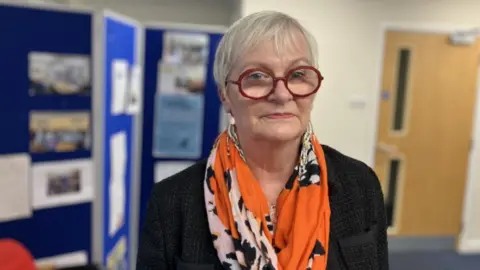
She added: "People often say they are a different person before and after the brain injury. Some people will say it's that hidden element of brain injury."
Headway produces identity cards which state that someone has a brain injury and how it affects them.
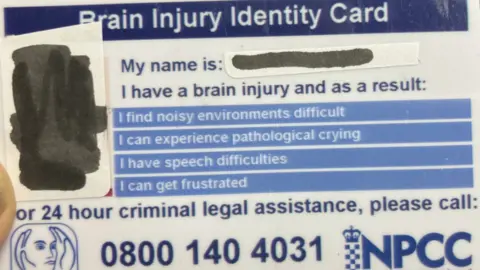
Nick hopes speaking out will spread more awareness of his condition and bring more understanding, and he hopes to get another job.
He asked any future employer to "bear with" him as he "means no offence", adding companies "might see it as giving me a free pass. It's not a free pass".
Follow BBC Gloucestershire on Facebook, X and Instagram. Send your story ideas to us on email or via WhatsApp on 0800 313 4630.
