How a council plans to revive 'the towns that time forgot'

 Simon Thake/BBC
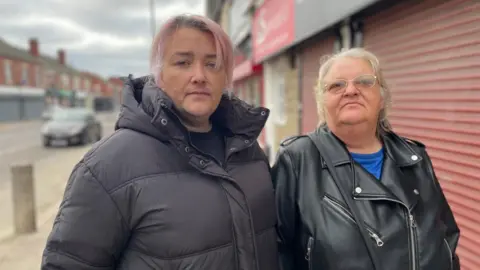
Catherine Harrison scans up and down the street and gently shakes her head.
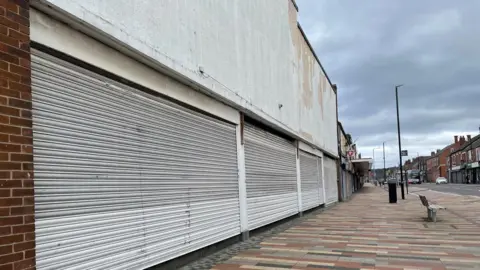
Amongst the handful of shops open on Doncaster Road today is an off-licence, a charity shop and a nail bar.
Elsewhere shutters are pulled down and windows boarded up and graffitied.
"It used to be a bustling market village" she explains.
"We had banks, we had post offices, we had all the services we needed and over the last 10 years it's just declined."
We are in Goldthorpe, a former mining area about 10 miles from Barnsley in South Yorkshire.
It is an area with a 18% vacancy rate for shops - that means just under one in five stores are currently unoccupied.
Mark Harris's carpet store has been located here for 25 years.
Although he says he is lucky to get "repetitive trade" from loyal customers, he calls the rest of the street "empty" and, with a sigh, describes Goldthorpe as "the town that time forgot".
"Everything has gone here. You can't even buy a pair of socks in Goldthorpe."
Barnsley Council is now hoping to do something about that.
 Simon Thake/BBC
Earlier this month, members of the local authority's Cabinet agreed to begin the process of introducing High Street Rental Auctions (HSRAs).
These could allow the council to step in and rent out persistently vacant commercial premises to new tenants.
Under the scheme, landlords whose shops have been vacant for more than a year could be required to allow the property to be rented through an auction process - hopefully helping new businesses or community organisations to move in.
The powers would apply to selected areas, where clusters of empty units are present. These would including where I am standing in Goldthorpe, Barnsley town centre (vacancy rate of 10%), and Wombwell (vacancy rate of 8%).
Councillor James Higginbottom, cabinet member for environment and highways says rather than a "heavy hand" the authority would aim to work with landlords and owners for a "much more productive outcome".
The plans are welcomed by Catherine and Marie.
"They have to do something, when you see the boarded up shops that have been there for, years, you just feel depressed," Marie says.
"Going back 10 years ago, I'd get my kids out in the pushchairs, we'd spend a day up here. There were shops open, cafes open, you'd meet your friends up here, you'd go clothes shopping for a weekend."
 Adam Laver/BBC
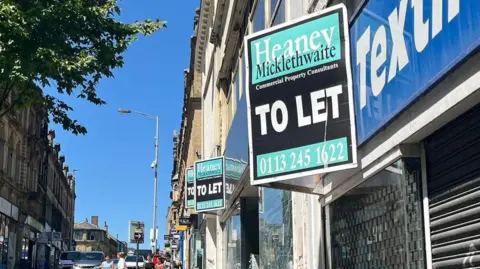
Although Barnsley is the first council in Yorkshire to adopt this strategy, other local authorities are equally concerned by empty units.
Bradford's current city centre vacancy rate is 29% - although the council suggests the figure is skewed by the inclusion of two major "legacy shopping sites" - the Oastler Shopping Centre, which has been shut down, and units in and around the Kirkgate Centre.
Both are slate are planned for demolition as part of plans to build 1,000 new homes as part of the 'City Village' scheme.
A Bradford Council spokesperson tells me they are "always open" to new ways of doing things, but, currently, have "no plans" to use the auction model proposed in Barnsley
"We will watch with interest how effective they prove to be," they add.
According to the Office for National Statistics (ONS) the average High Street vacancy rate for 2025 was 13%.
Rotherham Council also confirm that they're "considering" using the option of HSRAs in the future. As of 26 January 2026 the town has a vacancy rate of 23.2%.
Simon Moss, who is in charge or planning and regeneration for the council, says "improving the health" of the High Street is also a priority for their area.
Rotherham, like Bradford, is also undergoing an regeneration programme, which includes the £47m Forge Island development with a new cinema, hotel and restaurants and aims to breathe new life into the town centre.
One city centre that seems to be managing to keep unoccupied shops to a minimum is York - with just 5.6% of shops currently vacant.
Peter Kilbane, who is deputy leader of the council and tasked with improving the city's economy and culture, says that figure highlights the resilience of the local economy and "the appeal of York as a place for businesses to thrive".
According to Liz Thomson, property law specialist at legal firm Irwin Mitchell, despite the Levelling Up and Regeneration Act being in place since December 2024, it is still "early days" in assessing the effectiveness of HSRAs.
"So far as we know only one of these High Street rental auctions has taken place nationally," she explains.
"It is quite a lengthy process from start to end which involves councils designating areas, conducting surveys, marketing, serving notices, so it can take in total between 22 and 24 weeks from the start of the process to actually potentially getting a vacant property occupied."
 Simon Thake
Ion Fletcher, Director of Policy at the British Property Federation, also believes auctions could have a role to play but describes them as a "last resort".
"High Streets are struggling under a combination of sky-high business rates, the rise of online shopping, low consumer confidence and flatlining disposable income.
"They will not fix a system that has broken because of deeper structural pressures."
Fletcher also disputes the notion that landlords might "deliberately" keep units unoccupied .
"Shop owners want their properties occupied," he says.
"Their business model relies on rental income and empty shops face higher insurance premiums and risk of vandalism."
Thomson also points out that the auction process may present other issues.
"It does remain to be seen what kind of tenants come forward to bid at these auctions.
"Are they potentially the kind of tenants who are looking for a real bargain and might not necessarily be the calibre of tenant that we'd all ideally like to see in a vibrant High Street?"
 Simon Thake
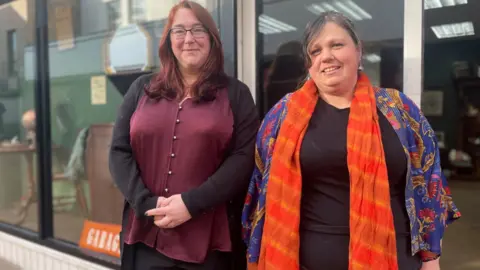
In Barnsley town centre, Shauna Robertson has recently opened new business Curiosity Cabinet on Market Street.
It is one of the areas that the council has been targeting.
The business owner nods across the street to one closed unit.
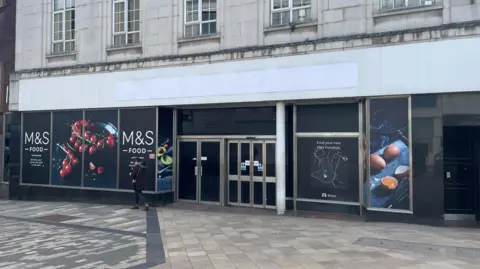
"That's the biggie" she intones, indicating the back of the large Marks and Spencer store which closed in 2023 and has not yet been replaced.
"People see shutters down and they see boards and they see graffiti - they tend to think that that comes with a level of danger and I think people will avoid a street."
Market Street now has several charity shops which Robertson believes has helped with footfall but she said the HRSA would be "a positive move"
"If we can get more local shops and more independent retailers. If we can make it more affordable for people - that would be excellent."
Listen to highlights from South Yorkshire on BBC Sounds, catch up with the latest episode of Look North
