Public Prosecution Service defends Nama court case

 PA Media
The Public Prosecution Service has defended its decision to prosecute Belfast businessman Frank Cushnahan over an allegation of fraud.
The 84-year-old corporate financier was found not guilty of the charge on Monday after a four-month trial.
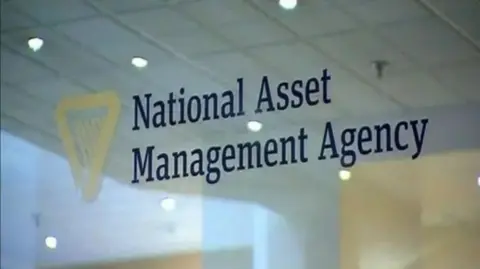
The case related to his time in 2013 as an adviser to the National Asset Management Agency, known as Nama.
In a statement on Monday evening, the Public Prosecution Service said: "We respect the jury's majority verdict."
It also stated: "The prosecution case was presented in open court and has now been tested during the adversarial trial process.
"At the conclusion of the prosecution case, the trial judge ruled there was sufficient evidence upon which a jury could convict.
"All decisions in this case were taken independently, impartially and in line with our duties set out in the code for prosecutors.
"As other significant matters remain live before the court, it would be inappropriate to comment any further."
The trial began in September and focused on events 12 years ago in the aftermath of the financial crash.
The cost of the long-running trial is not known.
The jury, which was sent out to deliberate on Thursday, came back on Monday afternoon with a verdict.
The trial at Belfast Crown Court was held before a jury of nine men and three women.
Cushnahan is still facing a separate charge in connection with the case, fraud by false representation, which he denies.
That charge was initially included in the trial but it was excluded in December for legal reasons.
Former Belfast law firm managing-partner Ian Coulter was also on trial, facing the same charge, but a health issue arose with his senior barrister and his trial could not continue.
In total, Coulter is facing five charges, which he denies.
The trial on those charges is due to be rescheduled.
Mr Coulter, 54, from Templepatrick Road in Ballyclare, County Antrim, used to be the managing partner at Belfast-based Tughans law firm
What is Nama?
Nama is the Republic of Ireland's "bad bank", set up to deal with toxic loans after the 2008 property crash.
The agency was established by the Irish government in 2009.
It was responsible for recovering the value of problematic loans made by other Irish banks during the Celtic Tiger period.
Nama bought these loans (land, property and associated loans) at a discount and sold them.
The Northern Ireland loan book was packaged into one portfolio, to be sold in one lump.
