Rare bone disease therapy 'milestone' bringing hope

 Ellen Knight/BBC
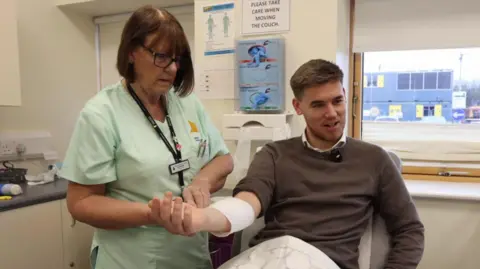
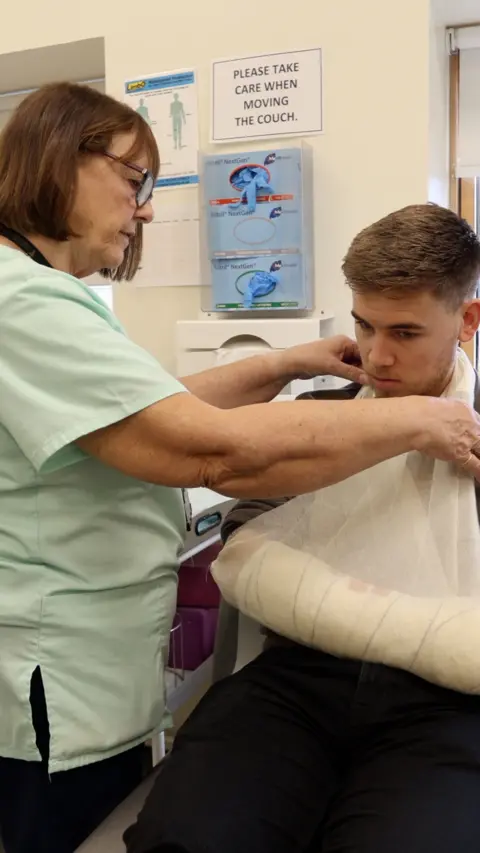
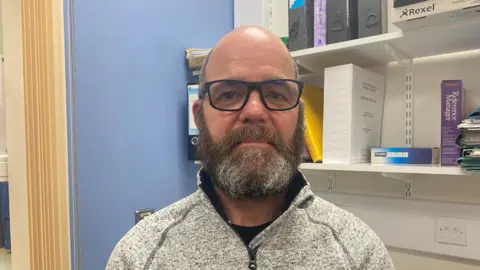
A man who has a rare bone disorder is being treated with a new therapy for the condition at the hospital were he also works.
Neville Owens, 57, from Oswestry, Shropshire, has had X-linked hypophosphatemia (XLH), once known as phosphate rickets, since he was a child.
Owens is among 15 patients in the country being given the newly-approved burosumab for the genetic disease which causes chronic bone pain and muscle weakness.
He is being treated at the Robert Jones and Agnes Hunt Orthopaedic Hospital in Gobowen, where Prof Chadi Rakieh called the drug a "tremendous milestone" for the NHS.
Owens, who has been treated at the hospital since he was child, said he is feeling hopeful about the drug.
"I've had this condition since I was a baby," Owens explained, adding when he reached his mid-30s he started to experience "a lot of pain and mobility issues".
"It was passed down from my mum - my mum's mum had it, she passed it to my mum, then I had it and I've passed it on to my daughter," he added.
The 57-year-old works at the hospital as a deep cleaner in the kitchens.
"To have this on my doorstep and to actually have [treatment] here is just brilliant," he said.
XLH affects the ability to manage phosphate levels in the body, leading to a softening of the bones, called osteomalacia.
Until recently, treatment has involved lifelong phosphate and vitamin D supplements - attempting to tackle symptoms, not the root cause.
But burosumab, which was approved for use in adults in 2023, targets the root cause.
Researchers say it works by balancing phosphate levels in the blood, which is hoped will lead to improvements in mobility and reduce pain.
'I have faith in it'
The drug is delivered to Owens, who self-administers it via injection.
He has only been receiving burosumab for about two months and it takes about six to 12 months to make a tangible difference.
"I have faith in it," he said, adding the knowledge there may be a treatment for the condition is "great, not just for me but for younger generations".
"It's a step forward."
 Ellen Knight/BBC
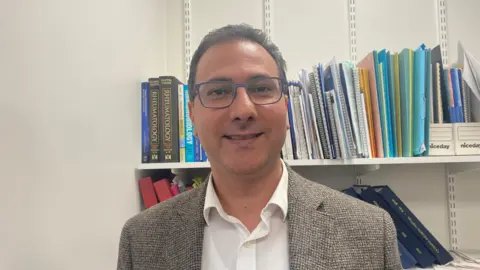
Prof Chadi Rakieh is a consultant rheumatologist at the hospital, and the clinical lead for metabolic bone disease.
"Historically, treatment was just to manage symptoms, it wasn't effective, it was limited," he said.
Burosumab works by treating the "underlying biochemical problem", he added, and results in "healthier bones, healthier teeth, and better outcomes for patients".
The Shropshire hospital is part of the National Rare Bone Disease Network, giving Rakieh's team access to "advanced diagnostic facilities and advanced treatment."
The use of the treatment is "a tremendous milestone" for the NHS, he said.
"I'm very, very proud to be part of this," Rakieh said, adding he was also very proud to work for the NHS and a force trying to advance treatment and increase the standards of patient care.
"And I think the future is great," he said.
For patients like Owens, the pioneering treatment brings a lot of hope.
"Looking into the future, I'm hoping this drug will do a good thing for me," he said.
"It's been a long time coming," Owens said, adding he is "really hyped up about it".
Follow BBC Shropshire on BBC Sounds, Facebook, X and Instagram.