What could policing overhaul mean for Yorkshire?

 Getty Images
Proposals which could see 43 police forces merged into just 12 in a bid to save money and cut down on red tape have been announced by the government - but what could that mean for policing in Yorkshire?
Announcing the largest reforms to policing in 200 years on Monday, Home Secretary Shabana Mahmood said the current structures were "outdated", and called policing the "last great unreformed public service".
Mahmood said that as part of the plans, a new National Police Service would be established to tackle the most complex and serious crimes, and could also see the number of local forces in England and Wales cut by about two-thirds.
Plans already announced have included a new "licence to practise" for police officers, and powers for the Home Secretary to sack under-performing chief constables and intervene in failing forces.
While details of what exactly all this could mean for Yorkshire are yet to be unveiled, there has been the suggestion it could see the region served by a "mega force" instead of the current separate forces serving West, North, South and East Yorkshire.
 Beth Parsons/BBC
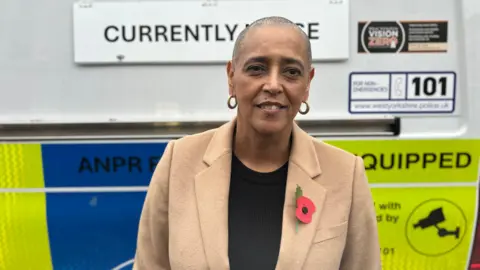
Alison Lowe, deputy mayor of West Yorkshire for policing and crime, said local priorities must stay at the heart of any reform to Yorkshire's police forces.
"We don't want to have something so big that becomes a mega force and we replicate all the problems we see on a regular basis emerging from the Met," said Lowe.
"I think mega forces are a bad idea for local accountability. How do we set local priorities when you've got such a huge footprint?"
According to the latest data from the Home Office, there are currently 6,139 police officers in West Yorkshire and 275,063 crimes were recorded by the force last year.
That compares to 3,026 officers in South Yorkshire and 149,532 crimes recorded, and 1,655 officers in North Yorkshire and 45,118 crimes.
Lowe said that "ironically" parts of West Yorkshire could benefit from a Yorkshire-wide force as areas with the highest crime could end up being allocated the biggest resources.
"I think that parts of West Yorkshire would definitely benefit from a Yorkshire-wide force, but to the detriment of other local communities in that wider multi-county footprint," she said.
To ensure accountability and fairness, Lowe said that as part of any changes she hoped policing would remain a mayoral responsibility.
"That's what's important to the public: not just getting that local response, but also getting their local voices heard and getting their local priorities very much imprinted in the policing crime plan and then in the plans of the police," she said.
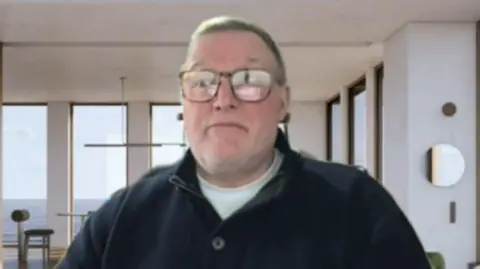
Prof Tony Blockley, head of criminology and policing at Leeds Trinity University, agreed that merging forces could create a "broad brush approach".
"Bigger isn't always better," he said.
"I think there are opportunities that come with bigger police forces, but not necessarily as a single model.
"I think there are elements to it which may be beneficial, but there were others that would, I suggest, create some challenges."
Blockley added that benefits to the creation of so-called mega forces could include improved efficiency and reduced costs by sharing resources such as uniforms, vehicles and HR services.
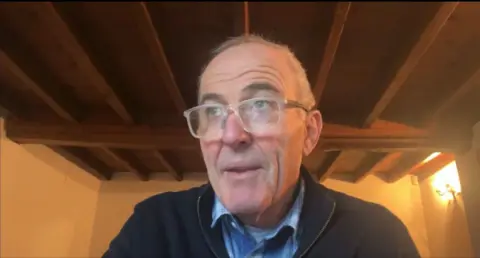
Tim Madgwick, retired Deputy Chief Constable of North Yorkshire Police, said a more joined-up approach to policing "makes sense", but he believed that funding would have to be standardised.
"It's quite costly to deliver services where you've got mixed demand or lesser demand over a huge rural area," he said.
"So you will have officers who are covering tens, if not hundreds, of square miles, but they won't have the demand that a small team in Bradford City Central will get."
Madgwick said that reform to policing was certainly needed, but that it would take time.
"I think there has to be an incremental acknowledgement that this is really big and there needs to be money and resource put to it," he explained.
"It needs to be recognised that the people who will be making some of these changes won't be some of the people who are there delivering it in five years' time.
"Those leaders will be different, the political landscape may well be different and that poses yet another challenge."
 Seb Cheer/BBC
Meanwhile, Jo Coles, York and North Yorkshire deputy mayor for policing, fire and crime, said reforms to police forces presented a "real opportunity" to strengthen policing and make better use of public resources.
However, she stressed that any changes to structure must retain clear, effective and strong democratic oversight.
"For us in York and North Yorkshire, but especially for our rural communities, it's vital that changes benefit our region," said Coles.
"Rural areas do not benefit from the same economies of scale as urban areas and it's vital reforms recognise this in order to deliver fair and effective policing for all."
According to Coles, the North Yorkshire force was looking after an area five times the size of the Metropolitan Police, but "with less crime and significantly less police officers".
"Police reform can only succeed if it works for every community, not just the largest cities or urban areas," she said.
Listen to highlights from West Yorkshire on BBC Sounds, catch up with the latest episode of Look North.
