Uni hopes to tap geothermal energy below campus

 Getty Images
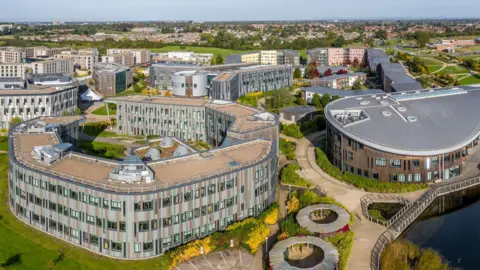
Work has begun to extract naturally heated water from beneath the University of York that will be used to warm the entire campus.
The Deep Geothermal Energy Project said the scheme, supported by £35m of government funding, could also heat homes in surrounding communities and generate electricity.
The process will involve drilling two pizza-sized boreholes to reach water 2.5 miles (4km) below ground which will be channelled through heat exchangers to power the university's radiators.
The energy source is "pretty much" infinite and will cut fossil fuel use on the campus by 78%, project leader Paul Bushnell said.
The project, due to be completed in 2027, is one of three in the UK being funded by the Public Sector Decarbonisation Scheme to help the government hit its emissions target of net zero by 2050.
 Deep Geothermal Energy Project
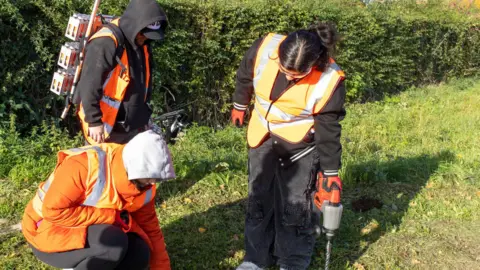
The first phase of the project was a seismic survey in 2025 which will create a 3D map showing the size, shape and depth of a heated reservoir beneath the Heslington campus and surrounding area.
The results will reveal the best place to drill the boreholes.
Previous geological surveys have suggested the rock beneath the university is ideal for geothermal energy, Mr Bushnell said.
"There's a high likelihood of there being an aquifer about 4km below York."
The aquifer, a subterranean reservoir capable of storing vast quantities of water heated by the Earth's core, is the resource his team is trying to harness.
"The source that we are looking at pretty much spreads over from Manchester to down towards Lincoln so if we can prove this [works] at the University of York it could open up a wealth of possibilities elsewhere."
Listen to highlights from North Yorkshire on BBC Sounds, catch up with the latest episode of Look North.
