Town's Jewish heritage celebrated with new trail

 Manchester Jewish Museum
A free digital heritage trail has landed in Greater Manchester - exploring the history of one town centre's Jewish communities.
The Stockport Jewish Heritage Trail invites visitors to explore the town's Jewish history through photographs, maps and memories - exploring shops, market traders, synagogues, homes, activists, war memorials, refugees and more from the 1800s and beyond.
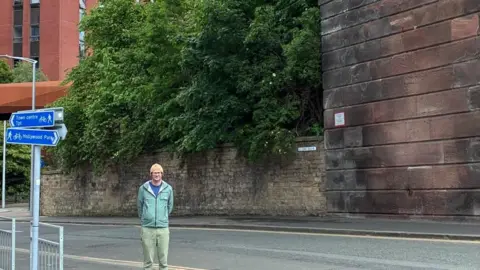
The trail - which has launched online - has been set up by Stockport resident and freelance archivist, Kevin Bolton.
"I'm hoping it increases awareness of Stockport's Jewish heritage and helps younger people in Jewish communities to feel connected and proud of their history," Bolton said.
 Kevin Bolton
Bolton said his interest in Jewish communities in Stockport began when he moved to the area, from London in 2004, with Greater Manchester being home to Britain's second largest Jewish community after the country's capital city.
"From the late 19th Century onwards, there was a small but significant Jewish community in the town based around the area of Chestergate and King Street West," Bolton said.
"The first generation were mainly immigrants from Central and Eastern Europe, escaping persecution, poverty and seeking work - often in tailoring.
"Jewish owned shops and businesses were also present in the town centre from as early as the 1830s, including stallholders trading at Stockport Market."
But Bolton said despite "fantastic research" from academics on the topic "the history of Stockport's Jewish communities is largely invisible in the town and its museums".
This led Bolton to begin working on building a trail around Stockport, looking into photographs, oral histories, and historic buildings, to map the somewhat forgotten history of the town's Jewish heritage.
Trail and destinations
It is made up of 27 locations from the centre of town to the outskirts. It is designed for virtual use - but the map can also be used as an in person guide.
Key features to explore on the trail include Chestergate Synagogue - which operated from 1905-1965.
In 1905, the Stockport Hebrew Congregation purchased Broach House on Chestergate.
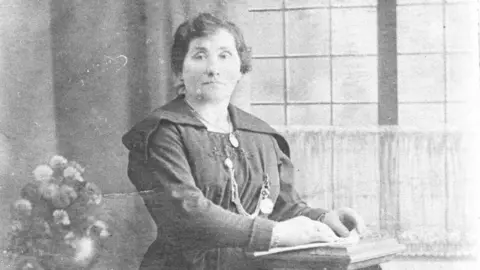
In the early 20th Century, the congregation had a woman lay leader, Mrs. Seramber. This role for a woman was common in Eastern Europe, but was relatively rare in Britain in this period.
 Kevin Bolton
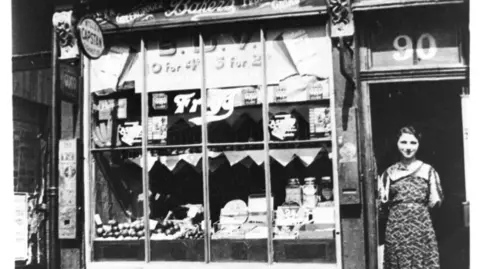
The areas of Chestergate and King Street West housed Jewish grocery shops, kosher butchers, businesses, and homes in the late 19th and early 20th Centuries.
Grocery shops would typically sell black bread, herring, butter, and smetena - sour cream - often from the front room of a house.
 Manchester Jewish Museum
Stockport was particularly famous for its industrial era cotton and hat making and the town became a major centre for these industries during the 18th and 19th Centuries.
 Manchester Jewish Museum
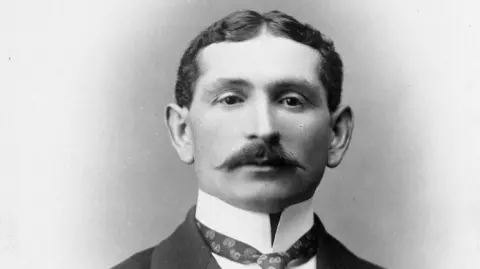
There were many other Jewish-owned trades and businesses in the town - and Ephraim Mark, the brother of Michael Marks of Marks & Spencer, even had a stall on Stockport Market in the 1890s.
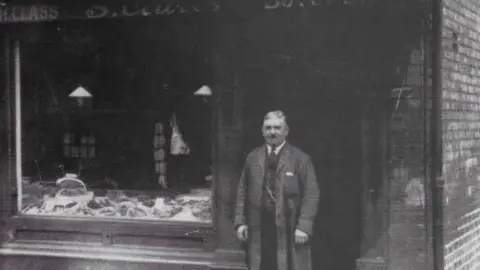 Manchester Jewish Museum
Another key element of the trail explores the Stockport Jewish Refugee Committee - and the Stockport home on Whitefield, which took in Jewish refugees from Austria and Germany during the Second World War.
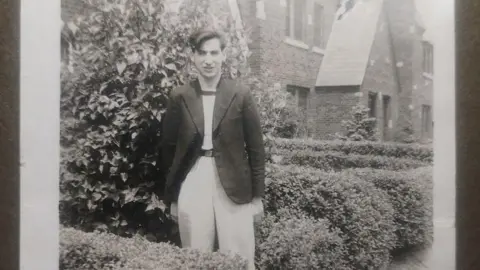 Manchester Jewish Museum/the Prager family
As the trail became available online this week, Bolton said he was "excited to see the interest it gets", after spending the past two to three years working on the project.
"When I have spoken to people about the trail, lots of people have said they had no idea about the Jewish history of Stockport," Bolton said. "And that reinforces the decision behind doing it.
"It's amazing to think about how that area has changed for both Jewish and non-Jewish communities as well.
He added: "I think we have been really lucky with this project because I've been able to use oral histories, and use, in a lot of parts, these people's actual words to describe the sites.
"That's a real privilege."
Bolton said that he encouraged everyone to take a look at the trail - adding that he had consciously made effort to make family-friendly elements, and to explain language in a way that was understandable for both Jewish and non-Jewish community members.
"I hope this encourages people think about Stockport's history a bit differently," Bolton added. "And I hope it might act as inspiration for more community members and other community groups to tell their stories in similar ways and preserve those memories."
Listen to the best of BBC Radio Manchester on Sounds and follow BBC Manchester on Facebook, X, and Instagram. You can also send story ideas via Whatsapp to 0808 100 2230.
