'I want to live my life': Fibromyalgia sufferers being failed by NHS

 BBC
BBCPeople suffering from the chronic pain condition fibromyalgia are being failed by the NHS, according to new research which found patients were waiting years for diagnosis, undergoing unnecessary tests and being prescribed harmful drugs.
Researchers at Aberdeen University said some doctors were even refusing to refer patients and dismissing them as "lazy".
The senior consultant who led the UK-wide research is now calling on the NHS to overhaul its care of fibromyalgia patients.
The Scottish government said it would continue to work closely with the NHS to improve how services are accessed and delivered.
Fibromyalgia causes pain all over the body and can bring on severe fatigue.
Some estimates suggest one in 20 people may have the condition.
Celebrities including broadcaster Kirsty Young and singer Lady Gaga have highlighted the issue by talking about their experiences. There is no cure.
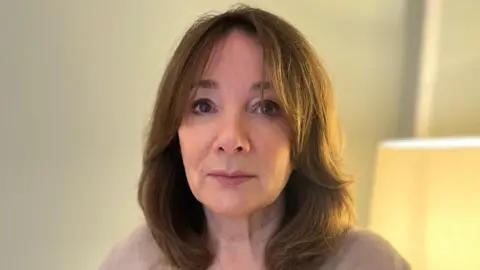
Sufferers like 62-year-old Adele Williams from Aberdeen describe the condition as a "daily struggle".
Adele starts her mornings with a cocktail of painkillers for chronic full-body pain, fatigue and brain fog.
"It's difficult to put in a box because it's different every day," she said.
"It is a muscular pain - it can be dull, it can be throbbing and it can be really sharp as well - like somebody is stabbing you with a screwdriver. And it's hot."
Adele worries about how she is going to spend the rest of her life.
She said: "The mornings are slow, because I am trying to realise how I am feeling at that point, what I have got to do in that day, and what I can call off if it is particularly bad.
"But I like to keep dates in my diary so I have things to look forward to - otherwise I wouldn't go out."
What are the symptoms of fibromyalgia?
According to NHS Inform, the symptoms of fibromyalgia include:
- Widespread pain
- Extreme sensitivity
- Stiffness
- Fatigue
- Poor sleep quality
- Cognitive problems
- Headaches
- Irritable bowel syndrome
It is not clear why some people develop fibromyalgia. The exact cause is unknown.
After years of tests and shrugged shoulders - Adele ended up paying to go private and finally got her diagnosis.
But getting to that milestone did not make her situation any better.
She said: "The diagnosis was a relief but since then it's been a case of there is no care pathway. You are told it's definitely fibromyalgia you have - here are some pain killers."
Prof Gary MacFarlane of Aberdeen University led a UK-wide study with patients and clinicians to ascertain how the NHS is dealing with the illness.
The paper concluded that there was no consistent model of care. Diagnosis was often delayed or inconsistent, particularly among men, and post-diagnosis support was limited.
Many professionals questioned the diagnosis itself and patients described a "revolving door" of referrals between pain, gastroenterology, and surgical specialties, with high personal costs, difficulty navigating care, and poor outcomes for their working lives.
Medication remained the default approach despite patients preferring a personalised, holistic, and non-drug support.
Prof Macfarlane said: "We are really only in the changing room of the race.
"Patients are not getting the early diagnosis and they don't have access to effective care. Instead they are being given painkillers that are only marginally effective and can have side effects."
He added: "A lot of clinicians have very unhelpful attitudes, many actually not believing that the condition exists, so patients will never get the diagnosis, and saying that patients are just distressed or lazy, or are making up symptoms."
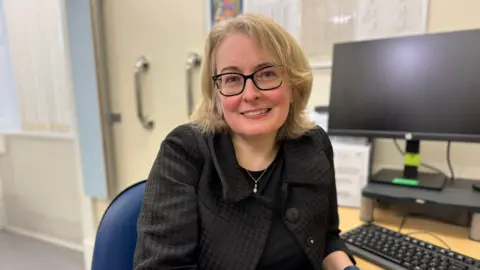
Because of the complex symptoms – patients often end up being sent to rheumatology. And sitting in front of people like Dr Rosemary Hollick.
Dr Hollick said it was a long complicated journey, and not a pleasant experience.
"It's going through all these investigations, and you're not getting answers and you're not getting any appropriate treatment," she said.
She added: "It's also costing the NHS a lot of money and potentially causing harm. It is about early diagnosis, getting in some appropriate support, some help to understand the condition and how to manage it and having that safety net to come back to if it's needed."
'No NHS pathway'
Adele simply wants to be able to live her life.
"There's not a pathway in the NHS for fibromyalgia sufferers. It's just painkillers and anti-inflammatories.
"I don't want it to take over my life. I don't want to be 'Fybromyalgia Adele' - I just want to get on with my life and have and do everything I want to do and it just fits in with me. "
The Scottish government's public health minister, Jenni Minto, said: "I am determined to improve care and support for people living with chronic regional pain syndrome.
"Everyone should be able to access the services they need, when and where they need them.
"We continue to work closely with the NHS to improve how services are accessed and delivered for patients and we are making progress on the issues that people with lived experience of chronic pain have told us matter most to them."
