Call for UK-wide primary school smartphones ban

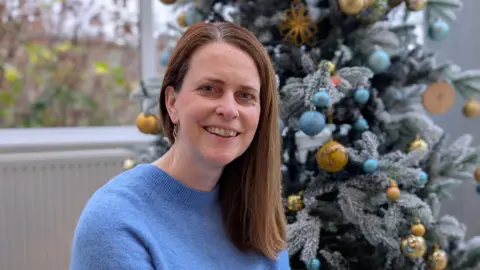 Katie Finch
A local authority is calling on the government to ban smartphones in primary schools.
West Sussex County Council will write to Education Secretary Bridget Phillipson after a notice of motion was passed during a full council meeting.
Councillor Donna Johnson said: "Mobile-free environments help reduce bullying and social pressure."
The Department for Education, which has been contacted by the BBC, previously said schools already had the power to ban phones and the Online Safety Act meant "better protections" from harmful content.
Officials have also issued guidance to ensure schools implement effective smartphone restrictions.
Councillor Johnson added the idea was not a rejection of technology but a "very practical" step to protect children's wellbeing.
'The right thing'
Head teacher Michael Tidd, who has already banned smartphones at East Preston Junior School in West Sussex, told the BBC most parents support the measure.
He added it "would be much easier to do it as a whole, en masse - as a national decision to say 'this is the right thing for children'".
A study in February, which looked at 30 secondary schools, said banning phones was not linked to pupils having better mental wellbeing or improving their grades.
Of those schools featured in the study 10 permitted usage at break times and 20 had restrictive policies such as phones being switched off and in bags or lockers. One of these restrictive schools had an outright ban of phones on the premises.
However, a report by the Policy Exchange think-tank found that secondary schools with an effective ban on phones are more than twice as likely to be rated 'Outstanding' by Ofsted as schools without.
Another study found that young people struggling with their studies are much more likely to have negative experiences with their devices than students who described themselves as "coasting" or "thriving".
Researchers who reviewed academic work on the impact of mobile phone bans in schools have said studies' different designs, samples, definitions of mobile phone bans and outcome measures mean it is challenging to reconcile their findings.
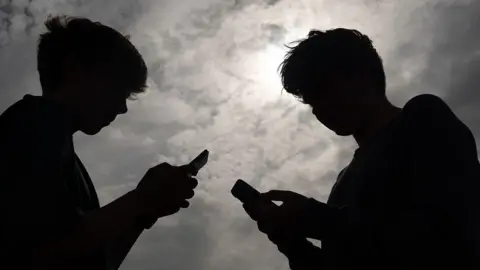 Getty Images
Katie Finch, a mum from Littlehampton who is the regional leader for Smartphone Free Childhood, called the council's appeal to government "excellent".
"I hope it gives the primary school headteachers the confidence to go ahead with making changes to their policies next year," she told the BBC.
In October 2024, a private members' bill was introduced that contained an aim to make all schools phone-free zones during the school day.
But the bill was withdrawn in September, according to the Local Democracy Reporting Service.
Clarification 7 January: This article originally referred to one academic study and explained that it suggested that "banning phones in schools is not linked to pupils having better mental wellbeing or improving their grades. "We have updated the article to explain that this study involved 30 secondary schools and have also added in details of two further expert studies to give more context to the broader academic findings in this area. On 23 February we added an additional line to make clear that the study involving 30 schools featured one school that prohibited phones entirely and the others had various policies for limiting usage.
Follow BBC Sussex on Facebook,X and Instagram. Send your story ideas to southeasttoday@bbc.co.uk or WhatsApp us on 08081 002250.
