Hosepipe ban lifted following rainy November

 Spencer Stokes/BBC
A hosepipe ban affecting over five million people has been lifted with immediate effect following a record-breaking rainy end to the autumn, Yorkshire Water has said.
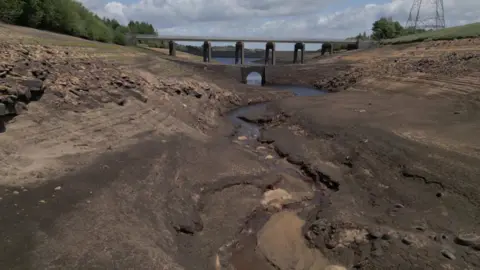
The restrictions in Yorkshire were introduced in July after the driest spring in 132 years, when only 15cm of rain fell between February and June - less than half that expected in an average year.
The summer was later confirmed as the hottest on record, but Met Office analysis found northern England had gone on to experience its fifth wettest November since 1836, with rainfall 84% above average in the north east of the region.
Drought status in Yorkshire ended on Wednesday after the recent rain, the Environment Agency said.
The region, which entered drought status on 12 June, has now moved into recovery status after six months.
Yorkshire Water thanked people for helping to cut water use by about 10% per day at the start of the hosepipe ban.
At their lowest point during the summer, reservoirs in Yorkshire were only 30% full, and could have dropped to 17% without the hosepipe ban and a grid system that moved water around the region, a spokesperson for the firm said.
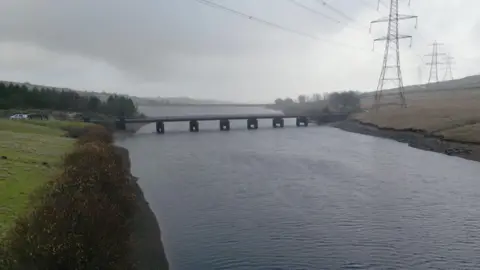
However, reservoir levels in Yorkshire now stood at 91.6% of capacity, while Hull aquifer levels were at 77%, they explained.
According to Yorkshire Water, the highest daily demand for water came on 20 June, with 1.479 billion litres being consumed by Yorkshire Water customers – 200 million litres more than the daily supply level.
 Spencer Stokes/BBC
Customers adhering to the hosepipe ban had helped to save the equivalent of 33 days of average water usage in Sheffield or 21 days of average usage in Leeds, the company said.
Dave Kaye, the firm's director of water, said: "When you get down to 30%, that really is the time to start worrying - so there's a huge sense of relief.
"We were worried we would have to move to the next steps, but thankfully we've seen rivers, reservoirs and groundwater sources recharge with the rain we've had."
Those "next steps" and contingency plans would have included the introduction of rotational cuts - when water supplies are interrupted in certain areas to control demand - and the use of standpipes on the streets, as happened during summer 1976.
This year's hosepipe ban was the second in three years to be introduced by Yorkshire Water after similar weather conditions in 2022.
However, the company said it could build a new reservoir as part of a strategy to manage future shortages.
Mr Kaye said: "With the reservoirs, we do need to look at whether we expand one or build a new one.
"But they are very expensive, they take a lot of time and ones being built now won't go into supply until the late 2030s.
"We do need to look at how we make ourselves more resilient to keep customers on supply in Yorkshire."
There is also a renewed focus on reducing leaks, with 15,000 repairs to Yorkshire's pipe network being completed while the ban was in place.
About £34m was spent adding two boreholes which can extract water from a vast underground aquifer in North Yorkshire.
One is being drilled at Brayton, near Selby, and a second at East Ness, close to Malton.
Once operational, they could add 21 million litres of water a day to the network.
Listen to highlights from West Yorkshire on BBC Sounds, catch up with the latest episode of Look North.
