Revival putting Manx dancing 'back on the map'

 Gráinne Joughin
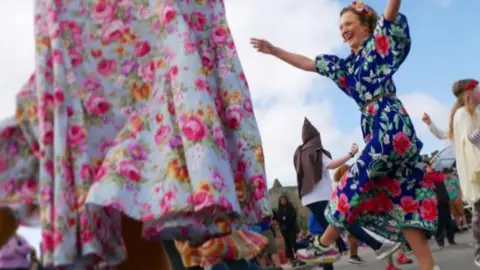
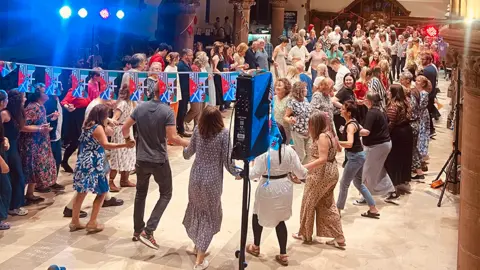
Manx dancing has been enjoying a growing revival, with new classes attracting people of all ages.
What began as a small idea has grown into a cultural movement on the Isle of Man, reflecting a wider appetite for reconnecting with Manx traditions.
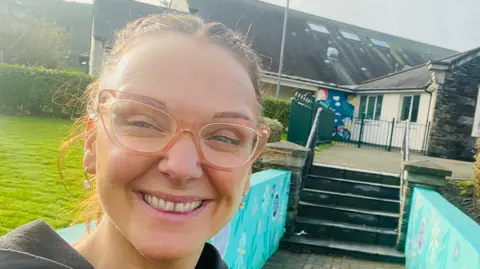
For dance teacher Gráinne Joughin, the increased interest has been both heartening and revealing, and had offered the chance to put Manx dancing "back on the map".
"People have really gotten behind it," she said, "it's a chance to have fun, meet people, and learn something new in a relaxed, safe space."
What resonated most, she added, was the sense of belonging.
"Manx dancing is completely unique - just like the language," she said.
"It's similar to Scottish or Irish in some ways, but it has its own style and story."
 Gráinne Joughin
Manx dancing, a traditional form of folk dance unique to the Isle of Man, is rooted in Celtic heritage and often performed to Manx and Gaelic music.
It shares similarities with Scottish and Irish dance but has its own distinctive steps and style, including characteristic arm positions and footwork.
Historically taught in schools and celebrated at community events, Manx dancing reflects the island's cultural identity and is now seeing renewed interest as part of a broader revival of Manx traditions.
Long-term leader of the dance group Skeddan Jiarg – which is Manx Gaelic for red herring - which recently showcased the island's traditional dance at one of Africa's largest folk dance festivals in Morocco, Joughin recently launched a new initiative to encourage broader involvement locally.
After launching a community Manx dancing "Fun & Fitness" class in November, Joughin has expanded sessions and is exploring more island‑wide options for 2026.
But, she insists, the bigger story has not been timetables - it was the island's renewed embrace of a living tradition.
"I teach from age two up to 72," she said, "people often say 'I remember this from primary school' and that speaks volumes about its impact."
She said while many participants were revisiting childhood steps, others in their 20s and 30s were discovering Manx dance for the first time, drawn to it by accessible, community‑based sessions rather than the formality of established teams.
"It did die out quite significantly, but now I'm trying to put it back on the map in a different way - as a way for communities to come together," she added.
 Gráinne Joughin
The upswing sits within a wider cultural moment, Joughin said: "We've seen a revival of Manx traditions over the past couple of years.
"With the Year of Manx Language, there's an extra push to make culture more mainstream and accessible," Joughin says.
Schools have also been beginning to play a part, she said.
"I've started going into schools - slowly but surely bringing it back into primary. It's been a resounding success so far; the kids are loving it," she continued.
"Dance is great for confidence, teamwork, mobility and coordination," she says, adding that she has been working with education leads to widen access despite budget pressures.
For those looking to give it a go, Joughin had some advice: "You don't have to be perfect. Just try - have a go.
"You might like it, you might not. But you'll be part of celebrating Manx culture."
Read more stories from the Isle of Man on the BBC, watch BBC North West Tonight on BBC iPlayer and follow BBC Isle of Man on Facebook and X.
