Police stations to be sold as part of estate plan

 EPA-EFE/Shutterstock
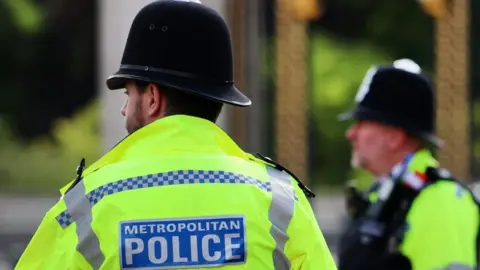
The Metropolitan Police has confirmed it will sell off four unused police stations across London to fund improvements to its estate.
This move is part of a new 10-year Estate Strategy with the Mayor's Office for Policing and Crime (MOPAC) following the mayor's investment of £1.16bn announced earlier this year.
Notting Hill, Enfield, Teddington and Kings Cross Road police stations which closed to the public in 2017 and decommissioned in 2022 will be sold.
The force also hopes to create 40 new hubs for its Safer Neighbourhood Teams, so its officers are within a 20-minute walk of the areas they police.
The Met has already opened hubs in Greenwich, Redbridge and Westminster, with more to follow.
The strategy also sets out plans to modernise forensic services, improve evidence storage, upgrade training facilities for firearms officers and start switching its vehicle fleet to electric.
However, the force has warned that it "will have to make some tough choices with its current estate, which includes more than 200 buildings across the capital".
It said this means prioritising projects that place more officers in communities via mobile or community hub police stations.
 Getty Images
The Mayor of London, Sir Sadiq Khan, said the challenges come after "14 years of underfunding form the previous government".
"Half of the buildings across the Met fall below acceptable standards and need to evolve to meet the demands of modern policing," he said.
He added that he would continue to push for funding from the government.
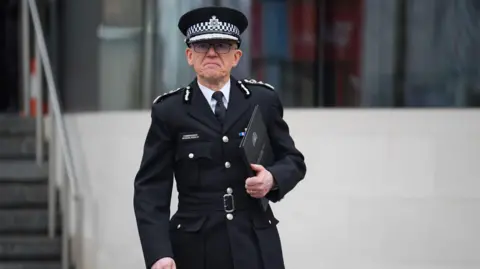
Metropolitan Police Commissioner Sir Mark Rowley added: "Given the well-established financial pressures we face, this new strategy sets out a realistic, achievable plan to get our buildings to an acceptable level and ensure that we are able to meet our legal requirements while still delivering on the things that matter to Londoners.
"Our financial challenges have massive implications for the speed with which we can improve conditions for our officers and staff, as well as the facilities and service we provide to victims of crime.
"It can't be right that the government spends nearly double the amount per square metre on offices for civil servants, despite the Met operating a much more diverse and specialist estate in a high-cost London environment."
 PA Media
The Met is investing in major redevelopments at Forest Gate and Kentish Town police stations.
Once these projects are complete, officers will move into the new facilities and sell off surplus and temporary sites, including Holloway and Stratford police stations.
If extra funding becomes available, the mayor and the force say they will go further by creating new training facilities for all officers, redesigning spaces for victims to make them more supportive and welcoming, and improving the experience for people reporting crimes.
The strategy also sets out ambitions to build a new emergency response base in south-west London within the next decade.
The chair of the Police and Crime Committee criticised the mayor after details of the Met's long-awaited estates strategy were shared with the London Policing Board but not with her committee, despite repeated requests for updates.
Marina Ahmad said it was "unacceptable" that the board – whose members are appointed by the mayor – had seen the plans while her committee had been left in the dark.
The London Assembly's committee used its statutory powers to issue a summons, requiring the mayor to explain why it was excluded from receiving a copy of the draft strategy, which meant it had no chance to comment as part of its oversight role.
At the meeting Conservative assembly member Susan Hall questioned why the document had not been shared with the assembly, saying it had been requested "more than 20 times".
Sir Sadiq replied: "I think that on a number of occasions the deputy mayor and myself said that we would seek to have the strategy completed by the end of this year, which we have done. In any strategy and any policy there are drafts, there are processes to go through.
"It is not unreasonable at all for MOPAC to seek advice from people. There is an important decision to be made between the role of the executive and the role of those who scrutinise policies in their final format, not policies in their draft format."
Hall expressed frustration at the delays, saying the issue had dragged on for years and was of cross-party concern.
She said: "Londoners like their police stations, as you will be aware with the closing of the front counters, and the estates strategy is very important. Nobody said you had to wait two or three years, nobody in the summer said you have to wait six months.
"We were constantly told it was going to be a short period of time. Why didn't you ask that we were given a draft?
"I do not know why we were waiting all this time."
Khan replied: "It is the Met Police's estate strategy and I will pass those comments on to the Met Police."
Listen to the best of BBC Radio London on Sounds and follow BBC London on Facebook, X and Instagram. Send your story ideas to hello.bbclondon@bbc.co.uk
