Shop owners fear violence after paramilitaries demand protection money

 PA Media
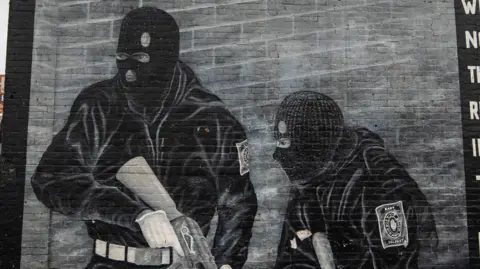
Business owners in Northern Ireland have described how they are still operating in fear of violence from paramilitaries to pay protection money in what one Stormont minister has called a "stranglehold on the community".
Across Northern Ireland, such payments are often made under duress and are in exchange for agreeing not to hurt them or damage their property.
One person said they were being extorted before they had even opened their store adding: 'My friend told me we would be killed if we didn't pay."
The Police Service of Northern Ireland (PSNI) said intimidation would never be tolerated.
BBC News NI has spoken to business owners anonymously about being threatened to pay money to proscribed organisations. It includes those running restaurants or shops and those in the construction industry.
One shop owner said: "When I came to open my business, two men came in. They told me: 'You're a woman, you need protection.' I said: 'Why would I pay you?'
"They'd see you setting up, getting the front sorted and approach.
"What's the point in calling the police? Nothing happens.
"One friend said to me, if we go to the police, we would be killed. Police don't do anything, why should we talk if we can't be protected?"
The Police Service of Northern Ireland (PSNI) has rejected such claims, and said those behind extortion would face the full weight of the law.
What is protection money?
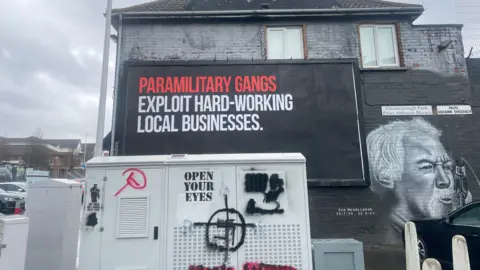
More than 25 years after the 1998 Good Friday Agreement, the practice still exists of shops, salons and restaurants handing over their cash to paramilitaries in order to trade.
A form of extortion, weekly or monthly payments are made by business owners who are promised protection by paramilitaries without becoming a target.
Such extortion can take many forms - direct and indirect.
One retailer said: "I have never been asked to pay for protection, but they asked me to contribute to the community activities which I did do."
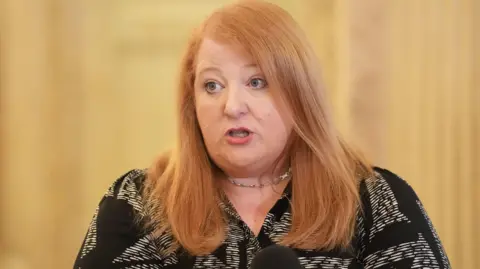
The Justice Minister, Naomi Long, has described the situation as a "stranglehold on the community".
She said high streets and construction sites are still paying paramilitaries to protect their businesses from threat of violence, amid a "culture of fear".
"The level of coercive control, the fear of reprisals, of intimidation, the fear that their business might be attacked or burned down, the fear that their family might be attacked," said Long.
"All of that puts a real pressure on people not to talk about this, so there is a culture of fear that's created."
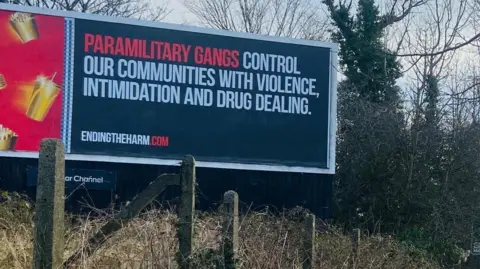
In 2024 a public awareness campaign called Ending the Harm was launched by the Executive Programme on Paramilitarism and Organised Crime (EPPOC).
Part of the campaign saw the erection of billboards and posters across Belfast, highlighting organised crime and paramilitary activity and the impact it has on victims, their families, local communities and wider society.
'Protection from us'
 PA Media
However, even in Long's own constituency of east Belfast, businesses have spoken about the pressure they have been put under.
She said one trader had been told they had to pay for protection and when they asked who they needed protection from, Long said they were told "protection from us".
"We hear many of these organisations talking about wanting to go out of business, talking about no longer wanting to be on the stage," Long said.
"Well there's a really simple way to exit the stage and one of them is to stop coercing people into giving you money.
"Stop exploiting businesses, stop the racketeering and all of the other things that are going on."
Who is behind this?
Both loyalist and republican paramilitaries are behind the practice, according to Long, and she urged those who have been targeted to report it to authorities.
She said the justice bill that is currently going through the Northern Ireland Assembly will introduce new legislation which creates offences of controlling or participating in organised crime.
"If you're involved in racketeering and extortion, you will be convicted and that's a message we need to send to those who are involved," she said.
What have the police said?
Det Ch Supt Emma Neill, who heads the PSNI's Organised Crime Branch, said paramilitaries use a "regime of fear and physical violence" to exercise control over communities.
She said the fear of reprisals often means victims are too afraid to come forward and speak up.
"Our communities don't want to, and don't deserve to, live in fear of threats of violence.
"We know how much of an impact these threats can have; but we cannot help if the criminality is not reported."
"Everyone deserves to live without fear, and those who attempt to control communities through threats or violence will face the full weight of the law," she said.
