GP services in 'crisis' as one patient calls 98 times for appointment - report

 Getty Images
Patients are experiencing significant difficulty accessing GP services in Northern Ireland, with one person describing how they dialled their practice 98 times before getting through.
Others said they faced consistent barriers in securing appointments, routine follow-up care, and face-to-face consultations.
Stormont's Public Accounts Committee (PAC) said the GP sector was "in crisis" after surveying more than 15,000 people.
The PAC report also said Department of Health (DoH) officials told the committee they did not know how many full-time equivalent GPs are employed across Northern Ireland.
The report outlines a litany of shortcomings and set out 10 recommendations for change.
The committee's online survey was conducted between February and March this year.
Responses included repeated, unsuccessful attempts to contact GP practices, with more than half rating their experience as poor.
Patient responses
People said getting through on the phone is "difficult", with one respondent saying: "My last attempt took 98 re-dials until I actually got into the queue to await the phone being answered. There are many times I have had to give up as I am in work and cannot take time to continue trying to get through…"
Another patient said: "You cannot access appointments - you have to call every day at 8.30am which for most parents is impossible due to getting ready for school or school run times."
One survey respondent said that when they couldn't get a GP appointment "they tell me to go to A&E, which I don't feel is appropriate".
Another said they "had to resort to visiting A&E to get confirmed diagnosis and prescription".
According to many of those who took part, the consequences of not being able to see their GP triggered stress and anxiety, and in some cases financial costs for private consultations or extensive telephone calls.
The British Medical Association NI GP committee chair, Dr Frances O'Hagan has called for "a radical rethink of how we fund the service".
She told BBC News NI that in Northern Ireland we "only get just over 5% of the budget, this report recognises that is vastly under funding what we actual need to provide a proper GP service".
"The recognised figure between 10 and 15% of the budget should be spent in primary care, to provide a primary care service that is suitable for the patients."
Dr O'Hagan also claimed that Northern Ireland has "the lowest funded general practice of anywhere in the four nations, and the Republic of Ireland".
'It's actually got worse'
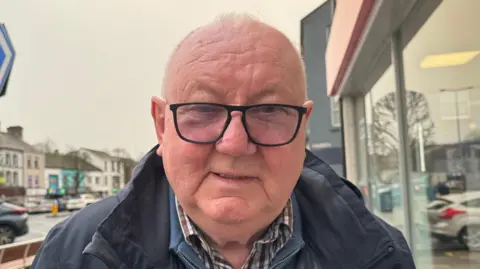
Ian Hawe from Cookstown said GP services are "pathetic, the worst ever".
"Since Covid it has went downhill and stayed there. It's never improved, actually it's got worse," he told BBC News NI.
"I can phone the GP at nine o'clock and still at 10 o'clock I haven't got through, and then the next thing they tell you it's closed."
Mr Hawe said that despite waiting on the phone for an hour and a half one morning he "never got through" and it made him "give up at that stage".
He said this is "totally frustrating, especially when I have COPD, so I need to get access".

Strangford resident Vincent Bent said GP services are "fairly easy" for him.
"You have to ring at half eight but usually if you stay on the line we can get an appointment that same day," he said.
Kate Campbell, who lives in Portaferry, also said it has been easy to get an appointment at her GP.
"I've just been there 15 months but I've made a couple of appointments," she told BBC News NI.
"As long as you ring just after eight-thirty it's grand."
'Lack of information' over GP numbers
In their evidence to the PAC, DoH officials said measuring the demand for GP services was "too difficult" and that it did not hold figures for how many full-time equivalent GPs are employed across Northern Ireland.
Criticising the DoH's lack of information about the current workforce, the report said that would affect how decisions are made about the number of trained GPs required each year.
The committee said the DoH should immediately introduce a workforce strategy for the GP sector.
Other recommendations included carefully managing the use of locums and quicker roll out of multi-disciplinary teams across Northern Ireland.
The chair of the PAC, Daniel McCrossan, said the report concludes that the primary care sector is in crisis and requires urgent intervention and stabilisation.
He said seeing a GP was a cornerstone of basic medical care but access for many it felt "impossible".
"It beggars belief that some of the fundamental building blocks of primary care are not in place," said the SDLP MLA.
The report's key findings
- Respondents consistently reported difficulty contacting their practice by telephone and said there was also limited appointment availability.
- More than half rated their experience as poor, with only a small proportion reporting positive access in the past year.
- The survey highlighted a heavy reliance on telephone systems, and limited alternatives such as online or digital routes.
- It also said there were clear indications of digital exclusion, with only a minority of people saying they had access to online booking.
- Many people also reported barriers linked to disability, limited digital skills or inadequate mobile coverage.
'Harming patient access'
The report concluded that the challenges faced by patients have resulted in delayed care, reduced confidence in the GP system, and a notable shift in patient behaviour towards out-of-hours services, emergency departments, and private healthcare.
It said that as a result, many patients have reported deterioration of conditions, prolonged illness, challenges in managing chronic disease, delays in obtaining test results and difficulties accessing medication reviews.
The DoH said it welcomed the PAC report and it would "consider the committee's findings and recommendations fully".
A statement from the department added: "There is full agreement on the need for a new vision for primary care and new models of delivery that will meet the need for improved and more equitable access."
The British Medical Association, the trade union representing GPs, said the report highlights "the urgent need for strategic action by the Department of Health to stabilise a sector in crisis".
"The current access proposals from the Department are harming patient access, not working and will not have the outcome for patients they hope for," Dr Frances O'Hagan said.
