Community service 'keeps us off the streets'

 BBC
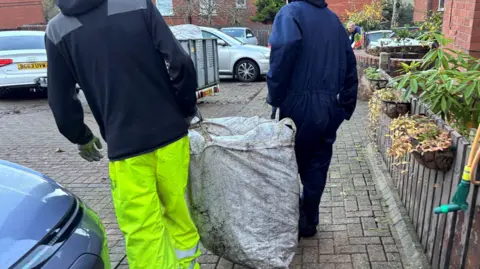
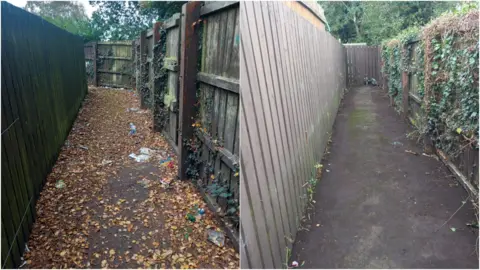
BBCThe sight of three young men happily cleaning a dirty alleyway for free in Belfast is not as unusual as it may seem.
They are all young offenders who are pleased not to be sent to prison and are instead carrying out community service.
Some of those involved have been speaking to BBC News NI.
"It keeps us off the streets. It's good for the area and it's good for us," said Michael, not his real name, who says he is trying to turn away from crime.
Critics of community service orders see it as a soft option for offenders.
People convicted of crimes such as theft, burglary, drug offences or domestic violence are among those who can be given community orders.
It is a sentence which does not involve prison but instead requires between 40 and 240 hours of unpaid community work.
The people who spoke to BBC News NI received community orders, including community service, for assault or drug offences.
Victims of crime can have a say in the type of work which perpetrators carry out, if they register with the Probation Victim Information Scheme.
They can also specify if they do not want to see an offender working in a specific place or area.
More than 70% did not go on to re-offend within one year
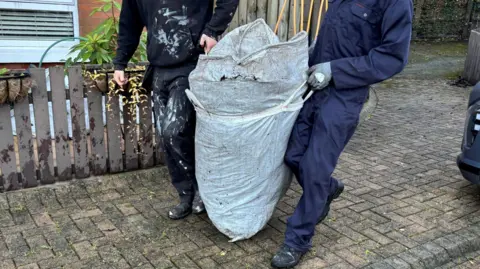
Clearing alleyways is one of a range of jobs. Others include graffiti removal, cutting grass, working in charity shops, conservation projects, painting and decorating.
The latest available statistics suggest community service orders are becoming more effective at reducing re-offending in Northern Ireland.
More than 70% of those supervised by the Probation Board did not go on to re-offend within one year.
Given the need to assess a person's behaviour over a period of time, the most recently available figures relate to those given a community sentence in 2022/23.
'It's rewarding, making the place look a lot tidier'
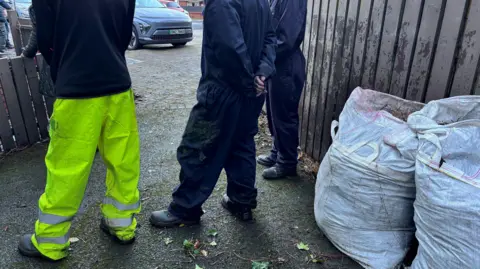
For the three young offenders clearing alleyways, under supervision in Poleglass, the work is a chance to turn their lives around.
It is too early to know if it will be successful, but the mood amongst them is positive.
"It fills up your day, makes your day fly in, instead of sitting about," said Michael.
Another said: "It's rewarding, making the place look a lot tidier.
"I should have been doing a lot more positive things in my life rather than negative things. I wish it had happened sooner."
'I've had people ask if they can volunteer'
Keeping an eye on them was Probation Board supervisor Glen Devine-Caldwell. He is hopeful the trio will not go back to crime.
He said: "They've done silly things in the past and they've had enough with living that type of life.
"I've even had guys who have come and said 'look Glen, after community service, am I allowed to volunteer?'"
How can unpaid work help?
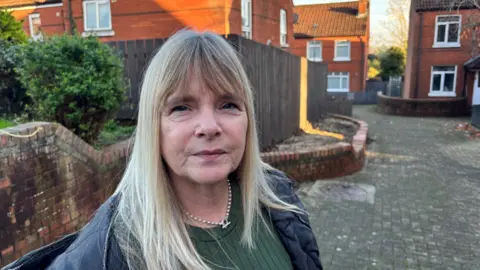
Aideen McLaughlin, assistant director of the Probation Board for Northern Ireland, said doing unpaid work is a crucial step towards salaried employment.
She said to avoid re-offending in the future "what works best is if someone has stable accommodation, if they have employment and they've addressed their mental health or addiction issues".
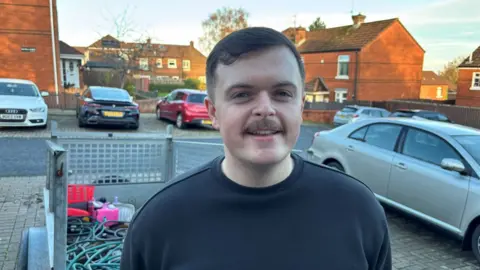
Sinn Féin councillor for the area, Caoimhín McCann, said schemes like the alleyway clean-ups are a "win-win" for those involved.
"It's an opportunity to give a little back to the community here in west Belfast," he said.
"While (government) departments are doing the best that they can in different parts of the area, there's always wee gaps that need filled."
The Probation Board works in partnership with a number of organisations including churches, sporting organisations, churches and men's sheds.
Probation Services officer Sinead Curtis said community service allows people to quickly learn new skills.
"It gets them into a routine, getting up in the morning, going and completing a piece of work," she said.
"It gives them a sense of responsibility for their own actions and achievement. It integrates them back into the community also."
Each year people subject to a community service order deliver about 100,000 hours of unpaid work.
The question some might ask is whether prison would be more appropriate for offenders?
McLaughlin said: "There will always be people who offend so seriously that they need a period in custody – both to protect the public and hopefully prevent re-offending.
"But for others, there are opportunities through a community sentence."
