'Constant rain has made farming more difficult'

 BBC
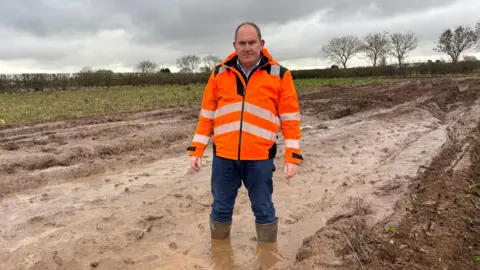
BBCAfter a long and "extraordinarily wet" winter, Jon Hammond has been left counting the cost.
The director at Nottinghamshire-based Hammond Produce, said incessant rain had left some of his fields "in places absolutely impassable for harvesting vegetables".
Year-round crops such as carrots and parsnips have been affected, he said, forcing farmers to take extra care when choosing which fields to use.
He has warned the changes in weather patterns could lead to more expensive food for consumers.
Parts of the UK have seen their wettest Januaries on record, which has led to flooding and other problems across the country.
Hammond said his business has had to work around a range of problems presented by the persistent downpours, and with next season's crops due to be planted soon he hopes for a change in the weather.
"We're lucky to have a range of different soil types in Nottinghamshire that's allowing us to continue harvesting and continuing to put fresh produce on the shelves," he said.
"We grow carrots and parsnips that we need to harvest all year round, we're harvesting cabbages, so it means that where we're digging carrots and parsnips we're having to choose the fields very, very carefully, because the machinery just sinks and we simply can't get the crop out of the field.
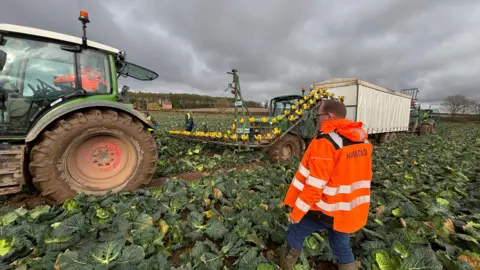
"With the cabbages, we've got a limited choice of fields, and we have to harvest where the cabbages are ready, and we're needing to tow the harvester with a second or third tractor.
"It's all hand-harvested, so the harvest teams are getting wet through every day."
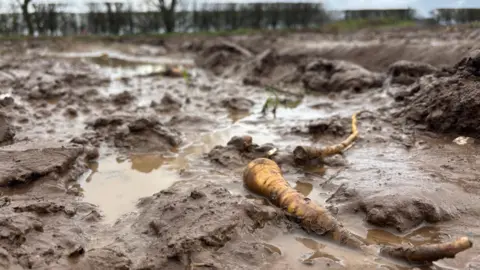
Hammond said the extra rain has had an impact on the quality of the crops, with additional disease and rot shortening shelf lives.
Coming months after drought hit Nottinghamshire and affected crop yields, he said the more extreme changes were hitting the farming industry.
"You've got to accept that the weather is becoming more volatile, it's becoming more extreme, the extremes are lasting for longer, and it's having an ongoing effect to what we're trying to do in food production," he said.
"Farming is all about producing food for the British consumer, and it becomes increasingly difficult to second-guess what the weather's going to do because they aren't the seasons that they used to be."
Follow BBC Nottingham on Facebook, on X, or on Instagram. Send your story ideas to eastmidsnews@bbc.co.uk or via WhatsApp on 0808 100 2210.
