Abandoned village evacuated in WWII open to public

 PA Media
An abandoned village which was evacuated in World War Two has invited the public to explore for a day.
In 1943, some 150 people living in Imber, Wiltshire, were given 47 days' notice to evacuate their homes so that the village could be turned into a military training area for troops.
Residents were promised they would be able to return after the war but the village is still occupied by the Ministry of Defence (MoD) with the public only allowed in for 12 days each year.
Roads will be open through Imber from 08:00 GMT on 29 December to 08:00 GMT on 2 January, allowing public access to the village and the original surviving church.
The Grade I-listed St Giles Church will be open from 11:00 to 16:00 GMT daily.
It is free to visit during open days and any donations will go toward the Churches Conservation Trust (CCT) for maintenance and restoration.
The MoD requires all visitors to stick to public rights of way and designated areas, and comply with signposting.
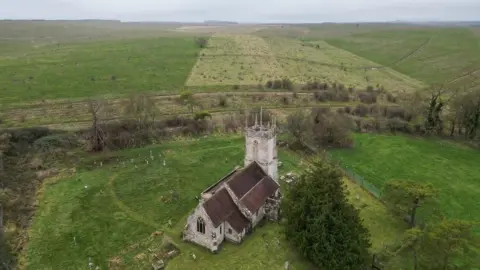
Custodian Neil Skelton said the church was one of the village's only original structures that remain, alongside the old pub.
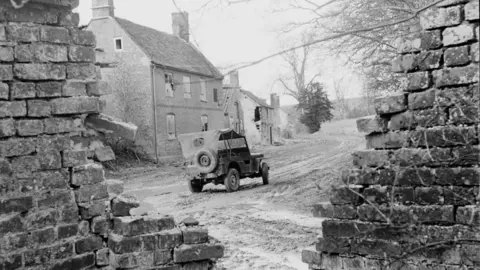
"There are very few of the original houses left because when they evacuated in 1943 they were mostly cob and thatch," he said.
"Of course once the thatch went, the water got in and the cob fell to the ground."
He added most of the larger stone buildings were badly damaged during training and they were subsequently demolished.
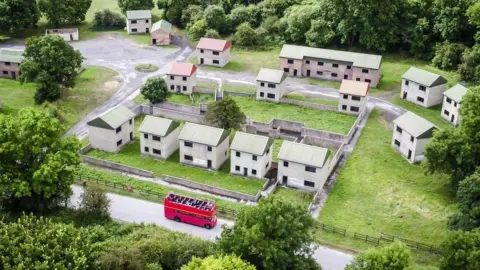
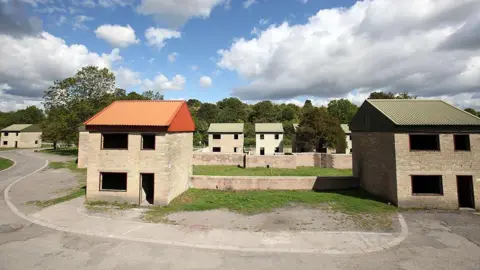
Most other houses are either hollowed-out shells or modern, windowless buildings built to simulate urban environments for military training.
 Hulton Archive/Getty Images
Mr Skelton said a lot of people come during the free annual events.
"I ask people why they do it and they say 'we just feel we should come and keep it open. If we don't, the MoD might just say well nobody comes so we'll shut it all up'."
Mr Skelton has volunteered for the CCT since his retirement in 2008, helping to protect the asset from being moved, destroyed or dismantled.
He added residents who once lived in the village have the right to come back and be buried in the church yard.
 Matt Cardy/Getty Images
"I know it's sad when you see the remains of the buildings where people once lived but it is lovely there sometimes," Mr Skelton continued.
"You've just got the owls, badgers, birds and and foxes for company. It's a very special place because it hasn't really been spoilt.
"[There are] huge swathes of land that haven't been farmed for 80 years. It's this wonderful feeling of 'this is what England must have been like many, many years ago'."
Imber also holds open days during Easter weekend and a single day in summer.
Follow BBC Wiltshire on Facebook, X and Instagram. Send your story ideas to us on email or via WhatsApp on 0800 313 4630.
