Founder of fashion retailer What Every Woman Wants dies

 BBC
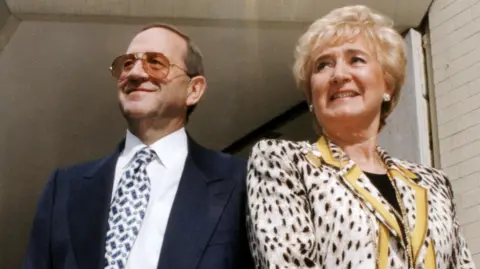
BBCThe founder of the What Every Woman Wants department store has died aged 87.
Vera Weisfeld launched the women's fashion chain with her husband, Gerald, in Glasgow in 1971 before expanding across the UK.
Stores sprung up in towns such as Irvine, Blackburn, Hartlepool, Ormskirk, Leyland and Swansea as well as one on the Isle of Man.
A family spokesperson said Vera died peacefully, with her family around her, on Thursday night.
The businesswoman and philanthropist was born on 10 February 1938 in a basement flat in Coatbridge, Lanarkshire, which had neither electricity nor an inside toilet.
Despite her wealth in later life, Vera was adamant that no property could ever outshine the warm memory of the tiny single-end flat at 29 Coats Street.
Her retail experience began at C&A on Glasgow's Argyle Street and she rose from a 15-year-old junior to head of the branch's Marking Off room within a year.
She had a photographic memory for the length of time garments had been in stock, what the buying price was, what the selling price was, the colour and the size.
The meticulous C&A system was one which she would take with her when she eventually set up 'What Every's' with Gerald Weisfeld two decades later, in 1971.
The Weisfeld Foundation
Together, they would go on to create a colossus of the High Street, which allowed women to afford London fashion at bargain prices.
Staff would sing the company song as they opened up each morning and TV adverts were recorded to the tune of Status Quo's hit "Whatever You Want".
And comedian Billy Connolly famously turned up in a horse and cart to declare the Argyle Street store open.
The Weisfelds sold the business in 1990 for £50m, believed to be the highest amount ever paid for a Scottish fashion house.
The first of its buildings, which was B-listed, was demolished in November 2020 after lying empty for 16 years.
Through their charity The Weisfeld Foundation, the couple donated millions of pounds to good causes, particularly those benefitting children.
In 1994, they travelled to Bosnia to oversee the distribution of aid to refugees from the Balkans War, despite a Foreign Office warning against all travel.
They also established homes for children with HIV infection in Romania, who had been shunned by their own families.
Gerald died in January 2020, aged 79, after a lengthy battle with Alzheimer's disease.