Scammed out of £17k, one woman flew across UK to confront suspect

 BBC
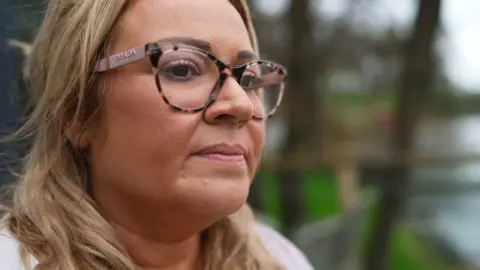
BBCAfter losing thousands of pounds in a scam, one woman has described how she flew across the UK in an attempt to find the fraudster.
Rhonda Montgomery lost £17,000 from her bank account after she was contacted by scammers pretending to work for Revolut.
Embarrassed and angry, she travelled hundreds of miles to confront the person she believed had stolen her money.
After tracking them down, she went to the door to speak to the man she believed responsible.
He was not there, however Rhonda spoke to the man's mother who claimed he no longer lived there.
"My thought was: 'I'm just going to have to go after the money and take the chance to see how I get on'," she said.
"I worked hard for it, and nobody is helping me."
'I couldn't pay for a cup of coffee'
The scam began when Rhonda was on a business trip to Germany.
She received a phone call from someone claiming to represent Revolut, reporting suspicious payments leaving the account.
"They knew I was with Revolut. They had my details, they knew my name, they were fit to tell me the payments that went out of my account," she told BBC Spotlight NI.
"I sort of felt that nobody could know that information, only it was Revolut themselves."
Rhonda believed the incident was being dealt with by the bank and life carried on as normal.
About a week later, back at home in County Tyrone in Northern Ireland, she was unable to pay for a cup of coffee.
"I decided to go into my app to see what was going on, and I just got a massive shock," she said.
"There was over £8,000 [in] payments that were taken out through the night."
It was then that she contacted the bank.
 Getty Images
Revolut encourages customers to use an online chat forum to deal with its customer service agents.
After joining an online chat, Rhonda said she was told there would be a two hour wait to deal with the relevant team.
While she was waiting in the chat forum, a phone call came from someone claiming to represent the bank.
It was the scammers again.
They were able to provide her with details, including her date of birth and a list of the payments she had queried in the online chat.
"I was going to transfer just the money out into one of my other bank accounts," she said.
"They then talked me into using this temporary account because. [They said] 'If your phone's compromised, you know, your other accounts could be compromised'," she said.
"He set the account up live in front of me. I could actually see it being done on my desktop computer."
Spotlight has been told Revolut's position is that Rhonda was persuaded to give away a code so fraudsters could use her card.
She denies ever doing this.
It's understood Revolut also maintains its system was not accessed by fraudsters and that Rhonda was sent five phone alerts about suspicious transactions, four of which she indicated she recognised.
Crucially, she could see the name and address associated with the account and took a note.
When she queried why it was not registered in her own name, she was told that was an "account manager" dealing with her case on behalf of Revolut.
Convinced, she moved the money to the new account.
That money was never made available to her again.
Rhonda had fallen victim to what is known as impersonation scam, where a fraudster pretends to be from a bank or other financial institution.
Armed with personal information, they often convince victims to authorise the payments to a different account.
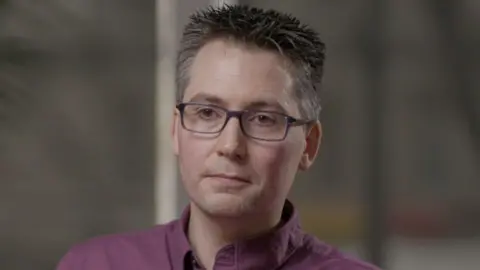
Chris Wynne, fraud and scam prevention manager at Danske Bank, said often scammers would pretend to be someone from the fraud team and would use that as a way to get the customer to hand over other information.
"They gather the information beforehand to be more targeted," he said.
"We all use lots of websites to purchase things online and, to do those, we have to give all very legitimate firms our personal details.
"The trouble we have is whenever some of those firms have, for example, data breaches and our information is compromised, then that information becomes available on the dark web for scammers to get access to."
In 2023, over 34,000 impersonation scams were recorded in the UK, accounting for nearly £148m in losses according to theUK Finance Annual Fraud Report.
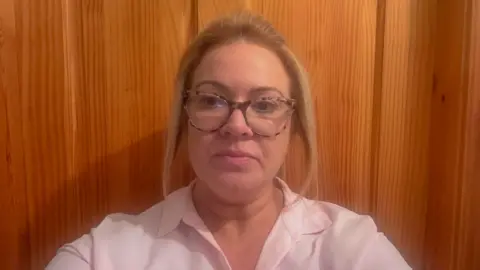
With the address she had taken note of during the second scam phone call, Rhonda decided to fly to England to seek answers.
"I didn't really broadcast it or tell anybody what I was doing," she said.
She drove to the property in Cambridge which was linked to the new account.
When she knocked on the door, the man whose name was used on the account was not there.
It was his mother.
Rhonda recorded a video of the interaction on her phone.
She explained she was in financial ruin as a result of the scam, and how she "almost had a nervous breakdown".
She was told the man no longer lived at the address and was estranged from the family.
BBC Spotlight NI also tried to speak to him but was unsuccessful.
He has not responded to our attempts to contact him, so we do not know exactly what role he had, if any.
Rhonda says she has got back some of the fraudulent card payments – about £4,000.
After the BBC contacted Revolut, it agreed to refund the £9,000 sent directly to the fraudsters.
Revolut told us it was sorry about Rhonda's experience.
"Fraudsters are using increasingly sophisticated social engineering tactics to deceive customers, often impersonating trusted institutions to gain access to information and account," the company said.
"If you think you have fallen victim to a scam or you don't recognise an outgoing transaction on your account, we advise you to freeze your cards immediately, update your Revolut passcode as well as any personal email account passwords, and contact Revolut customer support."
If you have been affected by a scam or fraud, you can find support on the BBC Actionline website.
